

What Is Staking in Crypto? A Beginner’s Guide for Australians
Introduction
What is staking in crypto is a question many Australians ask once they move beyond simply learning what cryptocurrency is. As crypto markets evolve, staking is often mentioned as a way users participate in blockchain networks rather than just holding digital assets. However, the concept can sound technical at first, especially for beginners.
For Australian users, understanding what is crypto staking involves learning how staking works, what it means in crypto trading, and how long staking crypto can take. This guide is purely informational and explains staking in clear, simple terms. It focuses on education rather than promotion, helping Australians understand how staking fits into the broader crypto ecosystem.
What Is Staking in Crypto?
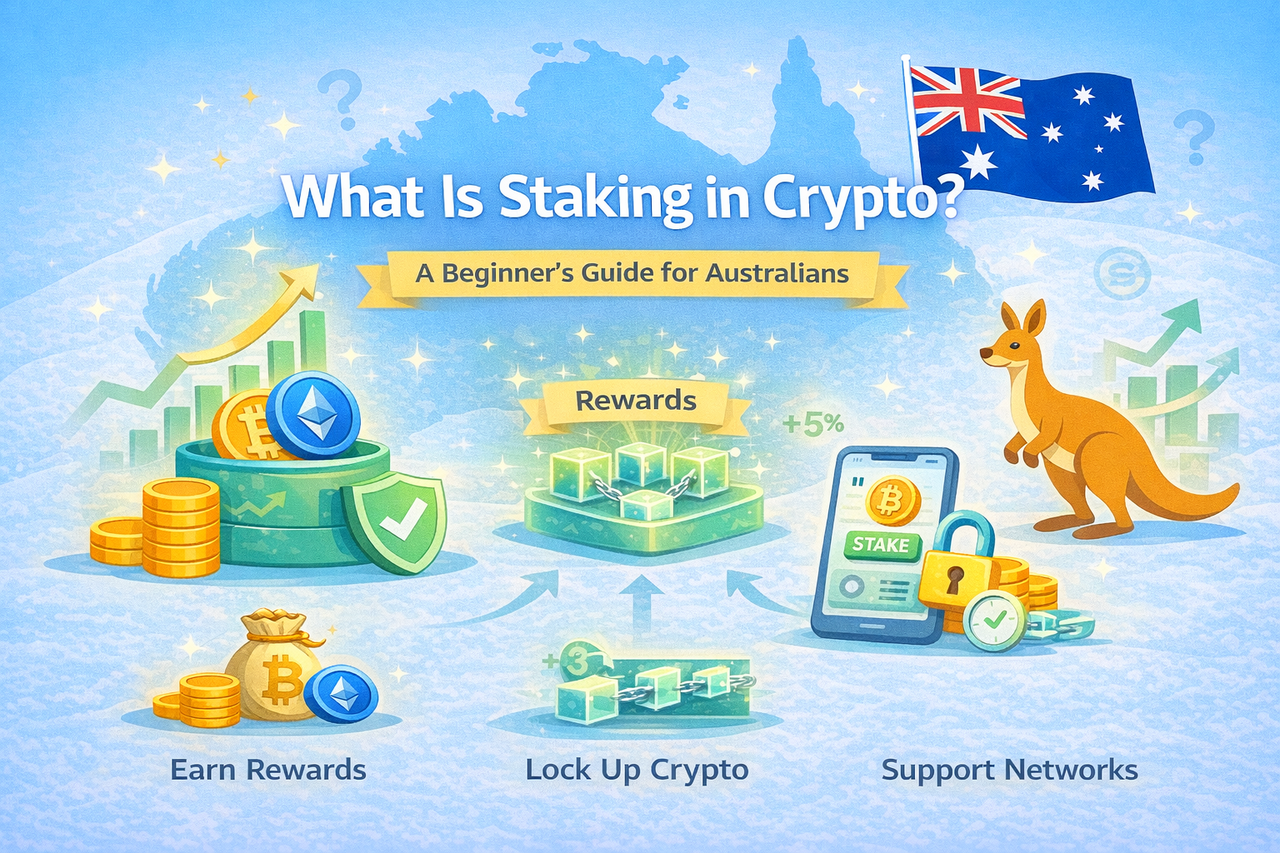
At its core, staking in crypto refers to the process of locking up certain cryptocurrencies to support the operation of a blockchain network. Instead of using large amounts of computing power, these networks rely on users who commit, or “stake,” their crypto to help validate transactions and maintain network security.
When people ask what does staking mean in crypto, the simplest explanation is that it is a way of participating in a blockchain by holding and committing assets rather than spending them. In return for this participation, users may receive rewards determined by the network’s rules.
What Is Crypto Staking and Why Does It Exist?
To understand what is crypto staking, it helps to know why it exists. Some blockchains use a system called proof of stake instead of proof of work. In proof-of-stake systems, validators are chosen to confirm transactions based on how much crypto they have staked.
This approach reduces the need for energy-intensive mining and allows networks to operate more efficiently. For Australians learning about crypto, staking represents an alternative way blockchains stay decentralised and secure without relying on mining hardware.
How Does Staking Crypto Work?
A common follow-up question is how does staking crypto work in practice. When a user stakes crypto, their assets are temporarily locked according to network rules. These staked assets help ensure honest behaviour by validators, as improper actions can result in penalties.
The blockchain distributes rewards periodically, often based on factors such as the amount staked and the duration. For beginners, it is important to understand that staking is governed by blockchain protocols rather than by individual platforms.
What Is Staking in Crypto Trading?
Some users encounter staking while learning about trading and wonder what is staking in crypto trading. While staking is not the same as trading, it often appears alongside trading features on crypto platforms. Trading focuses on buying and selling assets based on price movement, while staking focuses on participation and network support.
For Australians, staking is usually seen as a complementary activity rather than an active trading strategy. Understanding this distinction helps beginners avoid confusion between market speculation and blockchain participation.
How Long Does Staking Crypto Take?
Another frequent question is how long does staking crypto take. The answer depends on the specific blockchain and staking model. Some networks require fixed lock-up periods, while others allow more flexible staking with shorter commitment times.
For Australians exploring staking conceptually, it is useful to know that staking is generally not instant. Rewards may be distributed daily, weekly, or after specific network intervals. Lock-up periods and withdrawal times vary, so patience is an important part of understanding staking mechanics.
Staking and the Australian Context
In Australia, crypto staking is commonly discussed as part of the broader crypto learning journey. While crypto is legal to buy and hold, it is generally treated as property for tax purposes. This means staking-related activities may have reporting implications depending on individual circumstances.
Australian users often start by learning how staking works before participating. Platforms such as KuCoin Australia provide access to crypto markets and educational resources that help users understand concepts like staking in a clearer, localised context.
Understanding Rewards and Risks in Staking
Staking rewards are not guaranteed and can vary over time. Network conditions, participation rates, and protocol changes can all affect outcomes. For beginners, understanding that staking involves both potential rewards and risks is essential.
Australians learning about staking benefit from viewing it as a technical feature of blockchain networks rather than a guaranteed income mechanism. Education and realistic expectations are key to understanding staking responsibly.
Comparing Staking to Simply Holding Crypto
Some Australians wonder whether staking is different from simply holding crypto. Holding crypto means owning digital assets without actively participating in network operations. Staking, by contrast, involves committing assets to help maintain the network.
This difference explains why staking exists and why it is often discussed alongside network security and decentralisation. Understanding this distinction helps beginners place staking within the broader crypto ecosystem.
Learning About Staking Through Market Observation
Before engaging with staking, many Australians prefer to observe crypto markets and network behaviour. Tracking how different assets perform and how staking is discussed within the ecosystem can help build understanding.
You can view live market data and crypto asset information using the KuCoin Crypto Prices page, which allows users to observe market conditions and learn how different cryptocurrencies behave over time.
Why Education Matters When Learning About Staking
Staking concepts can seem complex at first, which is why education is especially important. Learning what staking means, how it works, and why networks use it helps Australians make sense of crypto beyond price movements.
For beginner-friendly explanations, updates, and educational articles related to staking and other crypto topics, the KuCoin Australia Blog offers learning-focused content tailored to AU users.
Common Misunderstandings About Crypto Staking
A common misunderstanding is that staking is risk-free. While it does not involve trading, staking still depends on network rules and market conditions. Another misconception is that staking rewards are fixed, when in reality they can change over time.
Australians new to staking benefit from recognising these nuances and approaching the topic as a learning experience rather than a shortcut.
Conclusion: What Is Staking in Crypto and Why It Matters
So, what is staking in crypto? It is a way for users to participate in blockchain networks by committing their crypto assets to support network operations. For Australians, understanding staking involves learning how it works, how long it can take, and how it differs from trading.
Staking highlights the technological side of crypto, showing how decentralised networks function without traditional intermediaries. Australians who take the time to understand staking concepts are better prepared to navigate the crypto ecosystem thoughtfully.
If you want to explore crypto concepts in an environment designed for Australian users, you can start here: Get started with crypto on KuCoin Australia.
Frequently Asked Questions (FAQ)
Q: What is staking in crypto in simple terms? A: Staking means locking up crypto to help support a blockchain network and potentially receive rewards.
Q: What does staking mean in crypto? A: It means committing crypto assets to participate in network validation rather than actively trading them.
Q: How does staking crypto work? A: Crypto is locked according to network rules, helping secure the blockchain, and rewards may be distributed over time.
Q: How long does staking crypto take? A: It depends on the network. Some staking involves fixed lock-up periods, while others offer more flexibility.
Q: Is crypto staking legal in Australia? A: Yes, crypto staking is generally legal in Australia, though it may have tax implications depending on circumstances.