

How to Prevent Fake Customer Service Scams?
Fraudsters often appear as official representatives, falsely claiming that users are involved in criminal cases or facing security threats to their funds, using the victims' panic to push them into rushing their actions. Scammers may also emphasize confidentiality, asking the victim not to discuss the matter with others to prevent the victim from seeking help or verifying the authenticity of the information. If you suspect that you might be the target of a scam, you should immediately contact the platform's customer service and change any passwords or security settings that may have been compromised. If you have already been scammed and a transfer has been completed or is about to be completed, immediately contact the platform's customer service to request that the related accounts be frozen. Also, please note that KuCoin will never ask you for privacy information such as security settings or request transfers via phone or email. If you receive suspicious information, please verify it in time and contact the platform's customer service.
Common Scamming Methods:
-
Impersonating Platform Officials or Public Officials for Scams:Scammers may impersonate official staff or public officials, guiding users to claim reward red envelopes, airdrops, or other deceptive actions to steal wallet information or assets. They may also falsely claim that an order has been processed by official customer service staff and then guide the user to make offline transfers or authorize transactions, resulting in financial losses.
-
Building Trust and Sending Illegal Links:Scammers may contact users through social platforms, emails, or SMS, impersonating platform customer service or other official staff. They use excuses like "eliminating account risks" or "cooperating with security checks" to send illegal links or fake phone numbers. Scammers may also pose as judicial officers or lawyers, claiming that the user's account has risks related to money laundering or illicit funds, and ask the user to cooperate in an investigation or resolve disputes. They may guide the user to provide platform or bank account information and perform withdrawals or transfers, ultimately scamming the user out of assets.
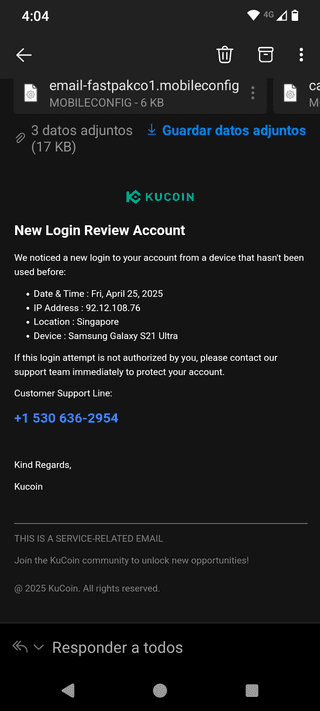
-
Impersonating Official Staff and Requiring Screen Sharing:Fraudsters impersonate official representatives to gain the user's trust, requesting them to download meeting software and share their screen, guiding the user to withdraw funds or directly stealing private keys, thus scamming assets. During the wallet creation process, scammers can obtain the user’s private key through screen sharing. Once the user transfers assets to the wallet, scammers will either withdraw the assets to their own account or directly guide the user to transfer the assets to the scammer's wallet via screen sharing.
-
Fake Official Staff or Fake Official Community Scams:There are many fake official communities in Telegram, mostly consisting of bots or fake users. Scammers may post false investment information, such as digital asset swaps, withdrawing funds to wallets for profit, or scanning QR codes for airdrops, leading users to trust them. Please be cautious and avoid clicking on unknown links or following tutorial instructions in these groups. Always protect your assets to prevent being scammed.When consulting platform business in the official group, you may receive private messages from impersonators pretending to be official personnel, enticing you to claim reward red envelopes or asking for personal information under the guise of resolving risk control issues. Do not believe or provide any account information.In Telegram, strangers may privately message you. If someone recommends a project, asks you to transfer funds, or asks you to register unknown software, be extra cautious to avoid financial loss or information leakage. You may also receive strange links or files, many of which are fake official announcements or contain trojan viruses. Do not download or click them easily.
-
Private Virtual Currency or Goods Trading:Scammers often post or proactively contact users for low-price exchanges or high-price purchases of digital assets (such as USDT) and refuse to pay during the transaction or deposit fake cryptocurrencies. They may also post information about selling virtual recharge cards like gift cards and ask users to purchase them with digital assets, requesting that the virtual coins be transferred to a specified address. Even if small trades are successful, after a few small trades, the scammers will find various excuses to guide the user into making large transactions, ultimately not delivering the assets after receiving the funds, or even blocking the user.
How to Prevent Scams:
-
Official operations will never privately message any users. Do not trust private messages claiming to be from official personnel. If you need to contact customer service, please verify the admin in the group.
-
Any claim in Telegram that can help you resolve risk control issues is a scam. Do not trust them.
-
The platform will never proactively send SMS messages or call customers without reason. Any requests for passwords, SMS verification codes, or Google verification codes are scams. Do not provide such information. If you encounter such situations, you can verify them through the official KuCoin platform channels.
-
Official platform staff or government officials will not proactively ask for passwords, verification codes, or request withdrawal or transfer operations under the excuse of your account being involved in money laundering risks. Be cautious of any private requests for asset transactions.
-
Fraudsters often use phone numbers from Europe, Australia, Hong Kong, etc., to contact users. Be vigilant if you receive calls from such numbers.
-
Do not disclose your wallet passwords, private keys, mnemonic phrases, or Keystore files to avoid asset loss.
-
KuCoin official staff will never privately contact you to request account passwords or other information.
-
When dealing with account asset security, do not engage in "screen sharing" or "taking screenshots" operations. Always stay vigilant.
-
Do not click on unfamiliar links or visit unsafe websites sent through unofficial channels to prevent account and password leakage, which could result in unnecessary losses.
-
Private trading poses a significant risk. Do not trust trading information about high-price purchases or low-price sales circulating on social platforms.
-
KuCoin does not encourage users to trade privately outside the platform, as private trading does not follow the platform’s trading process, and the platform cannot assist if fraud occurs.
If you receive a phone call, email, website link, or WeChat message from someone claiming to be an "official representative," you can verify it through KuCoin's official verification channels or contact official customer service. Do not trust any groups claiming arbitrage, arbitrage,or brick-moving projects, and be extra cautious of any projects that promise high returns or claim to be safe and stable.