

Understanding the Market Cap Equation: A Key Investment Metric
2026/01/06 15:57:02
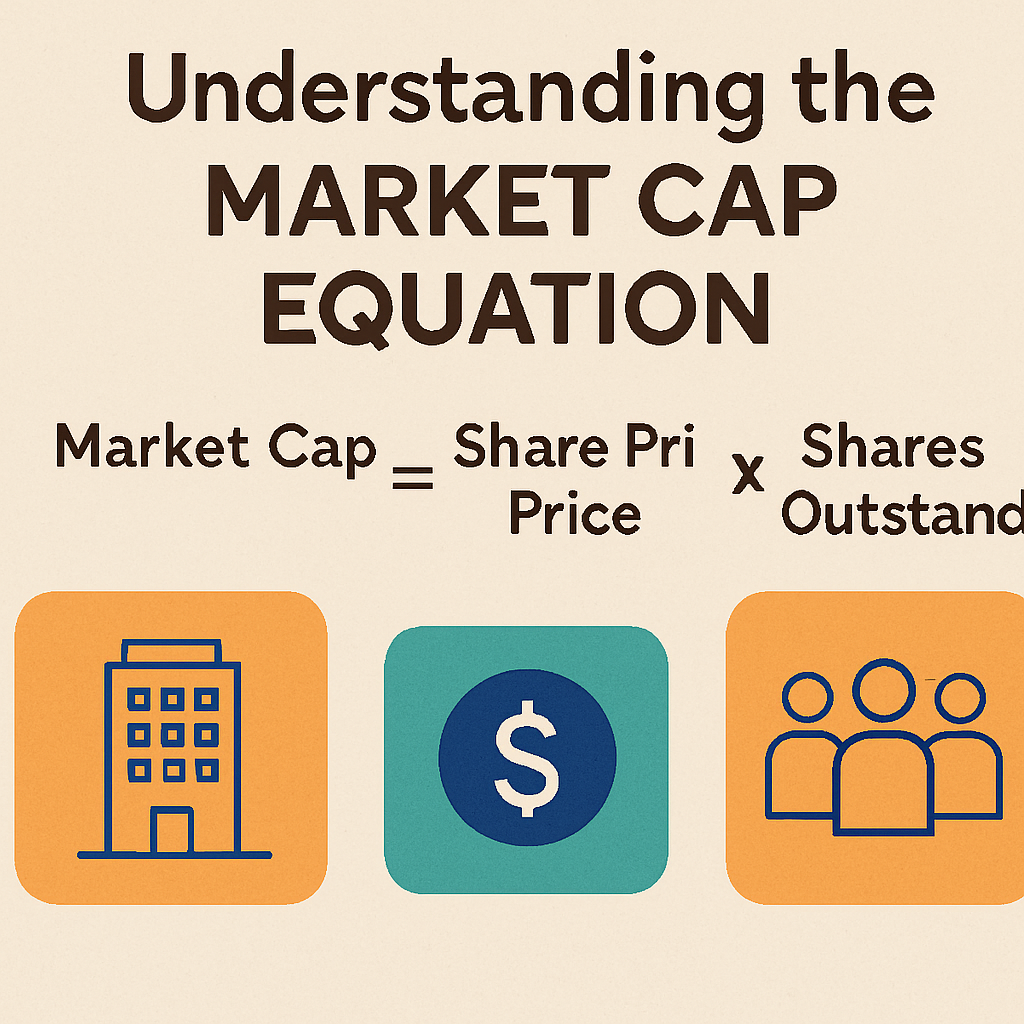
When diving into the world of investing, you'll frequently encounter the term "market cap" or "market capitalisation." This concept is a pivotal metric used by investors to gauge the size and value of a company. Market capitalisation provides insights that go beyond mere numbers; it reflects the market's perception of a company's value at a given moment. But what exactly is market capitalisation, and how do you calculate it? This guide will break down the essentials of the market capitalisation equation, its applications, and why it holds significant importance in the investment landscape.
Understanding market capitalisation is crucial for both novice and seasoned investors as it serves as a foundational metric in evaluating companies. It offers a snapshot of a company's size and market presence, which can influence investment strategies and decisions. By grasping the market capitalisation concept, investors can better assess a company's standing within its industry and make more informed financial choices.
This article will explore the formula for calculating market cap, its practical applications, and how it compares to other financial metrics.
Market capitalisation (market cap) is the total value of a company’s outstanding shares, calculated as Share Price × Number of Outstanding Shares. It helps investors gauge company size, compare peers, and build diversified portfolios across large-, mid-, and small-cap categories to balance risk and growth. However, market cap excludes factors like debt, cash, and profitability, so it should be used alongside metrics such as revenue, net income, and the P/E ratio. Tools like market cap calculators can provide fast, accurate figures to support investment decisions.
Market capitalisation, often referred to as market cap, is the total market value in pounds of a company's outstanding shares of stock. It provides a quick estimate of a company's size, offering a lens through which investors can assess a company's worth. Unlike other financial measures such as revenue or profit, market cap represents the market's collective judgement of a company's value at a specific time.
Market capitalisation serves as a barometer for investors, aiding them in understanding a company's market presence and relative size within its sector. It is a crucial indicator that guides investment decisions, particularly when comparing companies across different industries or evaluating potential investment opportunities.
By considering market capitalisation, investors can identify whether a company is a market leader or a smaller player with growth potential. It's an essential tool for building a diversified portfolio and aligning investment strategies with risk tolerance and financial goals.
Understanding a company's market capitalisation can help investors make informed decisions. It influences investment strategies and risk assessment, serving as a cornerstone for evaluating a company's potential:
-
Large-cap companies: These are typically established businesses with a market capitalisation of £10 billion or more. They are considered lower-risk investments with steady growth prospects, often providing reliable dividend payouts and stability in a portfolio.
-
Mid-cap companies: With a market capitalisation ranging from £2 billion to £10 billion, these companies offer a blend of risk and growth potential.
They are usually in the growth phase, making them attractive for investors seeking a balance between risk and reward. * Small-cap companies: These have a market cap of less than $2 billion and can be more volatile, offering higher growth potential but also higher risk. Investors looking for significant returns might focus on small-cap stocks, but they must be prepared for potential market fluctuations.
Market cap classifications help investors tailor their portfolios according to their risk appetite and investment objectives. By understanding the implications of each category, investors can strategically allocate assets to achieve desired outcomes, whether it be stability, growth, or a combination of both.
The calculation of market capitalisation is straightforward and forms the basis for assessing a company's size:
Market Cap = Share Price × Number of Outstanding Shares
This simple formula provides a snapshot of a company's market value, reflecting the price at which the market values the firm's equity. It is a fundamental calculation that investors use to understand the scale and competitive standing of a business.
-
Share Price: This is the current price at which a share is being traded on the stock market. It fluctuates based on market conditions, investor perceptions, and company performance.
-
Number of Outstanding Shares: These are all the shares currently owned by shareholders, including restricted shares owned by company insiders. This figure represents the total equity available in the market.
Let's look at an example.
Suppose Company XYZ has a share price of $50 and 10 million shares outstanding:
Market Cap = 50 USD/share × 10,000,000 shares = 500,000,000 USD
This means Company XYZ has a market capitalisation of $500 million. This calculation helps investors quickly assess the company's market size and compare it with peers. Understanding this equation is essential for making informed investment decisions and evaluating a company's market positioning.
For those who prefer a digital approach, a market cap calculator can simplify the process. These calculators require you to input the share price and the number of outstanding shares to give you the market capitalisation instantly. They are especially useful for investors managing multiple stocks or those who need to make quick calculations.
-
Efficiency: Quickly calculate the market cap without manual computations. This is particularly beneficial for investors who need to analyse large volumes of data or make rapid investment decisions.
-
Accuracy: Minimise errors that can occur with manual calculations. By using a calculator, you ensure precision in your assessments, reducing the risk of miscalculations that could impact investment choices.
-
Convenience: Easily accessible tools online that can be used anytime. Whether you're at home or on the go, these calculators provide a user-friendly interface for investors to stay informed and make data-driven decisions.
Market cap plays a crucial role in forming investment strategies.
It is a key factor that can guide your investment decisions and help shape your portfolio's risk profile and growth potential:
Investors often diversify their portfolio by investing in companies of different sizes. A diverse portfolio can mitigate risk as it is less likely to be affected by the volatility of a single market segment. By balancing investments across large-cap, mid-cap, and small-cap shares, investors can protect against market fluctuations and capitalise on growth opportunities.
Diversification is a strategic approach that helps investors manage risk and achieve long-term financial goals. By spreading investments across various market caps and sectors, investors can cushion their portfolio against downturns in any single area while benefiting from the stability of large-cap shares and the growth potential of smaller companies.
-
Large-cap stocks: Typically offer stability and dividends, making them a safer choice for conservative investors seeking steady income and minimal volatility.
-
Mid-cap stocks: Provide growth potential and are often considered a balance between risk and reward. They offer the possibility of capital appreciation along with relative stability.
-
Small-cap stocks: Offer the highest growth potential but come with increased risk. These stocks are suitable for investors with a higher risk tolerance and a focus on long-term capital gains.
Understanding the risk profile associated with each market cap category allows investors to tailor their strategies to align with their financial objectives and risk preferences. By carefully selecting stocks based on market cap, investors can optimise their portfolios for maximum returns.
Smaller companies, despite their higher risk, often have more room for growth compared to well-established large-cap companies. Investors looking for high returns may focus on small-cap stocks, which can offer substantial gains if the company succeeds. However, this approach requires careful analysis and a willingness to accept potential volatility.
Investors seeking growth must weigh the potential rewards against the inherent risks of small-cap investments. By conducting thorough research and staying informed about market trends, investors can identify promising opportunities and make strategic decisions that enhance their portfolio's growth potential.
While market cap is a valuable tool, it's not the only metric to consider when evaluating a company.
Other key financial metrics provide additional insights into a company's performance and financial health:
-
Price-to-Earnings (P/E) Ratio: Measures a company's current share price relative to its per-share earnings. It helps investors evaluate whether a stock is overvalued or undervalued compared to its earnings potential.
-
Revenue: The total income generated by a company from its business activities. This metric indicates the company's ability to generate sales and sustain its operations.
-
Net Income: The company's total earnings or profit, reflecting its financial success and efficiency in managing expenses.
While market cap offers a quick snapshot of a company's size, these additional metrics provide a more comprehensive understanding of a company's financial standing and growth prospects. By analysing multiple metrics, investors can make more informed decisions and develop a well-rounded investment strategy.
Market cap does not take into account a company's debt, cash reserves, or profitability. It simply reflects the equity value of a company, and investors should use it alongside other metrics to obtain a comprehensive view of a company's financial health. Relying solely on market cap can lead to incomplete assessments and potential investment pitfalls.
Investors must recognise the limitations of market cap and consider a range of financial indicators when evaluating potential investments. By incorporating metrics such as debt ratios, cash flow, and earnings growth, investors can gain a deeper understanding of a company's financial health and long-term viability.
Understanding the market cap equation is essential for anyone involved in investing. It provides valuable insights into a company's size and market value, helping investors make informed decisions.
While it is an important metric, it's best used alongside other financial indicators to evaluate the true potential of an investment. By considering a combination of metrics, investors can develop a comprehensive view of a company's prospects and make strategic investment choices.
Whether you're a seasoned investor or just starting, knowing how to find market cap and interpret its implications can significantly enhance your investment strategy. Use tools like market cap calculators to simplify the process and ensure accuracy in your evaluations. Remember, a well-rounded investment approach considers multiple factors beyond just the market cap.
As you continue on your investment journey, keep in mind the importance of diversification, risk assessment, and the balance between potential growth and stability. By understanding the nuances of market cap and its role in investment strategies, you can build a robust and resilient portfolio. Happy investing!
Q&A
Question: What is market capitalisation and how do you calculate it? Short answer: Market capitalisation (market cap) is the total market value of a company’s outstanding shares. It’s calculated using the simple equation: Market Cap = Share Price × Number of Outstanding Shares. The share price is the current trading price, which fluctuates with market conditions, and outstanding shares include all shares held by investors (including restricted shares). For example, if a company’s share price is $50 and it has 10 million shares outstanding, its market cap is $500 million.
Question: Why is market cap important for investors? Short answer: Market cap offers a quick snapshot of a company’s size, market presence, and how the market currently values its equity. Investors use it to compare companies across sectors, gauge relative scale, and shape portfolio strategy—particularly for diversification across large-, mid-, and small-cap companies to balance risk and growth. It helps with risk assessment but should be combined with other financial metrics for a fuller picture.
Question: What do large-cap, mid-cap, and small-cap mean, and how do they relate to risk and growth? Short answer: These categories group companies by size and imply different risk–return profiles:
-
Large-cap (typically £10 billion+): Generally more established and lower-risk, with steadier growth and often dividends.
-
Mid-cap (£2–£10 billion): Offer a balance of risk and growth, often in a growth phase.
-
Small-cap (under roughly £2 billion): Higher volatility and risk but greater long-term growth potential if the business succeeds. These classifications help tailor portfolios to your risk tolerance and goals.
Question: Does market cap include debt, cash, or profitability, and what other metrics should I consider? Short answer: No. Market cap reflects only the equity value and does not account for a company’s debt, cash reserves, or earnings. To evaluate financial health and valuation more completely, use it alongside metrics such as revenue, net income, the P/E ratio, and, where relevant, indicators like debt ratios, cash flow, and earnings growth.
Question: When should I use a market cap calculator, and what are the benefits? Short answer: Use a market cap calculator whenever you want a quick, accurate figure without manual maths—especially helpful if you track multiple stocks or need rapid comparisons. The benefits are speed (efficiency), fewer mistakes (accuracy), and ease of access (convenience) via online tools, helping you make timely, data-driven decisions.