

The Era of Crypto Lending in Russia: Sber Prepares Infrastructure for BTC, ETH, and USDT Collateral
2026/08/31 11:59:00
Introduction
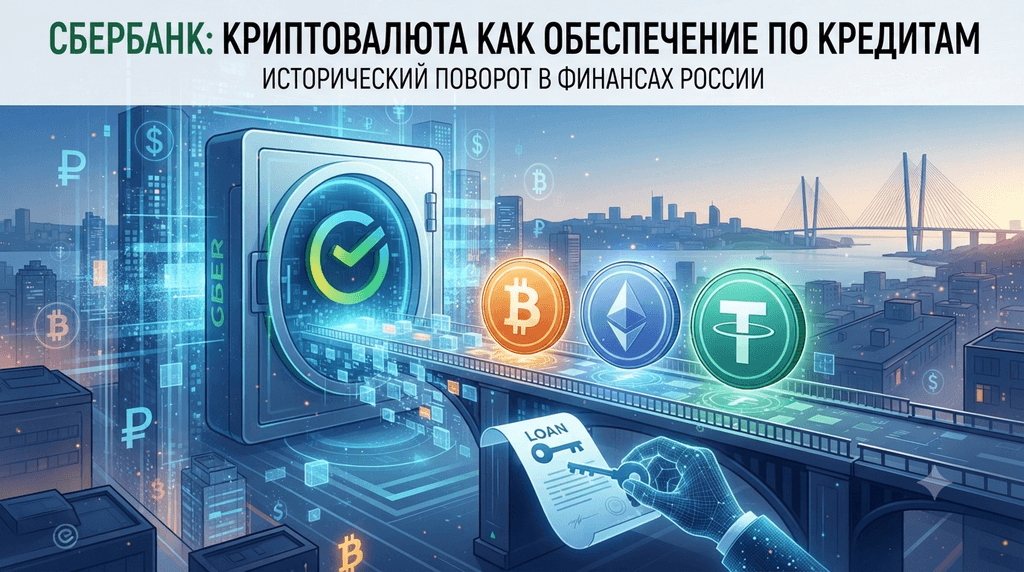
The announcement by Sber's management regarding plans to accept Bitcoin, Ethereum, and the Tether stablecoin as loan collateral marks a historic turning point in Russia's official financial policy. According to TASS data from August 28, 2026, Deputy Chairman of the Executive Board Anatoly Popov stated on the eve of the Eastern Economic Forum about the credit organization's readiness to integrate digital assets into classic banking products. This step reflects the global transformation of the financial sector, where traditional institutions are beginning to recognize the value of blockchain assets. However, the implementation of such mechanisms directly depends on the regulatory stance of the Central Bank and the creation of a clear legal framework.
What Are the Main Conditions and Timelines for Launching Crypto Lending at Sber?
The key condition for launching crypto-backed lending is the official permission from the Central Bank of Russia for their public circulation. According to RBC and TASS reports, Sber is not planning to bypass the regulator, but rather is building its strategy strictly within the framework of future state legislation. As Anatoly Popov noted, the bank will adapt its existing products as soon as the law enters into full force and the Central Bank permits assets for legal turnover. This approach guarantees that all operations will comply with security and compliance requirements, eliminating legal risks for clients.
The regulatory landscape regarding digital assets is changing rapidly, yet the central bank maintains a strict position regarding the protection of retail investors and the stability of monetary circulation. This is precisely why major commercial banks are in no rush to launch risky financial instruments without prior detailed coordination with the country's main financial authority. Legislative initiatives are being worked out in stages, allowing financial institutions to create technological platforms in advance and test them in closed environments. Such synchronization of actions with the regulator reduces the likelihood of sudden prohibitive measures and creates a predictable environment for institutional players.
Does Sber Have Real Experience Working with Digital Assets?
Sber possesses serious practical experience working with cryptocurrency, accumulated through years of technological testing and participation in regulatory sandboxes. The bank is not starting from scratch, but rather relies on deep technical developments in the blockchain sphere that have been conducted over the past few years. Such initiatives allow the financial giant to pre-test storage infrastructure, risk assessment, and transaction security. The presence of internal expertise lowers technological barriers and allows for the prompt scaling of products after final approval from the regulator.
Within closed technological tests, the bank's specialists have already worked out scenarios for interacting with distributed ledgers and digital tokens. This gives the bank a unique advantage over competitors, as the technical infrastructure for working with digital assets is already at a stage of deep readiness. Integrating blockchain solutions into traditional banking architecture requires not only modern software, but also the highest level of cybersecurity, which Sber handles successfully thanks to its own engineering developments. Furthermore, the accumulated expertise allows the bank to effectively interact with blockchain analytics systems to check the purity of incoming assets.
What Significance Do Bitcoin, Ethereum, and Tether Hold for the Banking System?
Each of the declared assets fulfills a strategic role in the emerging ecosystem of banking collateral. Bitcoin (BTC) is viewed as digital gold, providing reliable long-term capital storage and protection against inflationary shocks. Ethereum (ETH) represents the technological foundation of smart contracts and decentralized ecosystems, possessing independent investment value. The Tether (USDT) stablecoin plays a crucial role in international settlements and foreign trade, providing a direct peg to fiat currencies and solving liquidity tasks for businesses under sanction restrictions.
The choice of these three specific assets is no accident, as they form the liquidity foundation of the global cryptocurrency market. Bitcoin acts as the primary reserve asset, Ethereum attracts institutional investors with its technological versatility, and Tether is indispensable for prompt settlements. For the Russian economy, facing unprecedented external challenges, the inclusion of stablecoins into banking turnover can become a powerful tool for bypassing settlement barriers and supporting import substitution in global markets. Synchronizing traditional credit lines with liquid stablecoins opens fundamentally new opportunities for foreign economic activity participants.
How Does Sber's Initiative Relate to Macroeconomic Policy and the EEF?
The announcement was made on the eve of the Eastern Economic Forum, giving it the status of an important macroeconomic signal regarding Russia's readiness to use advanced financial tools to adapt to sanctions. According to RBC data, the integration of digital assets into the banking sector is aimed at bypassing logistical and settlement barriers in foreign trade, as well as attracting new capital. The state and major market players are demonstrating a pragmatic approach, transforming digital currencies from a gray zone into an element of sovereign financial infrastructure capable of opening new economic corridors.
Making such statements at the Eastern Economic Forum venue underlines their geopolitical significance. Russia's foreign trade vector toward Asia requires flexible financial instruments, and cryptocurrency settlements together with bank credit backed by them can significantly simplify business operations for domestic companies. State structures are gradually coming to the realization that strict bans hinder technological development, whereas controlled integration can bring significant benefits to the national economy. This also demonstrates the aspiration to form independent financial routes within friendly international associations.
How Will the Risk and Collateral Assessment Mechanism Operate?
The mechanism of lending against digital asset collateral will require strict standards due to the high volatility of the cryptocurrency market. Banks will use over-collateralization models, where the value of blocked BTC, ETH, or USDT must significantly exceed the amount of the issued ruble loan. In addition, automated position liquidation systems will be required in the event of a sharp drop in the market value of assets. Such measures will minimize credit risks for the bank and protect the interests of borrowers during periods of market turbulence.
Risk management in the sphere of crypto lending differs significantly from classical mortgage or consumer lending. Since cryptocurrency exchange rates can change by tens of percent in a matter of hours, banking algorithms will need to track collateral value in real time. If the market price of the collateral falls below a critical threshold, the system must automatically demand collateral replenishment or partial loan repayment to avoid forming unsecured debt. Such automation reduces the operational burden on credit managers and guarantees high stability for the financial organization's balance sheet.
What Are the Prospects for Developing the Digital Credit Market in Russia?
The appearance of such products based on Sber can trigger a large-scale transformation of the entire financial sector of the country. Other major players in the banking market will inevitably begin developing analogous offerings so as not to lose their client base among crypto investors and participants in foreign economic activity. This will lead to the formation of a full-fledged digital financial services market, where blockchain assets will become a legitimate financial planning tool.
In the long term, the legalization of crypto lending will allow a significant volume of capital that is currently outside the legal field to return to official economic turnover. Businesses and private investors will receive a legal opportunity to attract fiat funds under digital asset collateral without the need to sell them and pay excessive costs. Such an approach will increase the overall transparency of the financial system and strengthen Russia's positions in the sphere of digital finance on the international arena. The development of digital asset storage and valuation infrastructure will also stimulate the influx of qualified IT personnel into the banking sector.
How Buying and Trading Cryptocurrency on KuCoin Helps Prepare for New Financial Realities
As leading financial institutions integrate digital assets into credit products, owning liquid coins becomes an important tool for managing personal and corporate capital. Using reliable global platforms like KuCoin allows investors to safely acquire, store, and diversify a portfolio of leading cryptocurrencies, including Bitcoin, Ethereum, and USDT. Regular monitoring of market trends and competent asset management on the exchange provide an opportunity to prepare for the emergence of new financial tools, such as bank loans against crypto collateral, minimizing risks and maximizing potential profitability.
Modern trading on leading global exchanges requires not only an understanding of technical analysis, but also a strategic approach to forming a long-term portfolio. Users who pre-form quality crypto assets on verified platforms gain a substantial advantage when new opportunities appear on the traditional financial market. The integration of cryptocurrency into the banking sector proves that digital assets have finally secured their status as a full-fledged class of investments requiring a professional approach to risk and capital management. Having a diversified portfolio on a reliable exchange acts as a dependable foundation for participating in future financial programs of traditional banks.
KuCoin Offers A More Stable Option in A Volatile Market
If you worry about the frequent ups and downs in the market, and pursue a more stable option to earn money passively, KuCoin is the right place to come:
Simple Earn: Deposit and withdraw tokens anytime, earning stable returns.
Kucoin Earn: Earn stable profits with professional asset management.
Hold to Earn: Earn rewards by holding assets in Funding, Trading, Margin, Futures, Mining, and Unified Accounts.
Staking: Unlock the earning potential of on-chain assets.
Advanced Investments: Advanced Investments offer a variety of structured products to help your money grow in any market.
Shark Fin: Principal Protection and Guaranteed Gains
Dual Investment: Buy low and sell high with transparent return calculations.
Snowball: High yields, with price protection.
Discount Buy: Buy crypto at discount prices.
KCS Loyalty: Level up to enjoy exclusive perks by staking ≥ 1 KCS.
KuCoin Wealth: Discover future value and begin your smart investing journey.
KCS Benefits: Hold and stake KCS to access benefits across the platform.
KCS Staking 2.0: Participate in KCS on-chain governance to earn yield.
Conclusion
Sber's plans to implement lending backed by Bitcoin, Ethereum, and Tether reflect the deep evolution of the Russian financial system. Despite the fact that the implementation of the initiative directly depends on the softening of the Central Bank's position and the legalization of public asset circulation, the very fact of preparation by the largest bank speaks of a long-term trend toward integrating the blockchain industry into classic banking. The bank's technological experience and the strategic significance of such tools as stablecoins for foreign trade underscore the state's pragmatic approach. In the future, this is capable of radically changing the lending landscape and opening new opportunities for digital asset owners.
Frequently Asked Questions
1. When will Sberbank actually start issuing loans backed by cryptocurrency?
The launch of lending will begin only after the Central Bank of Russia officially permits the public circulation of cryptocurrencies and the corresponding package of laws enters into force.
2. Will it be possible to pledge altcoins other than Bitcoin and Ethereum?
Sber's management official statements specifically mention Bitcoin, Ethereum, and the Tether stablecoin, however, in the future, the list of assets may expand as the regulatory framework develops.
3. Why is Tether (USDT) so important for banking products in Russia?
Tether is pegged to the US dollar and actively used in international settlements, making it a critically important tool for businesses engaged in foreign trade under conditions of restrictions.
4. Will an investor lose ownership rights to cryptocurrency when issuing a loan?
During collateralization, ownership rights are temporarily restricted by contract terms: assets are blocked in a special account or with a custodian until the loan is fully repaid, after which they are returned to the owner.
5. What risks does crypto lending in a traditional bank pose for the borrower?
The main risk is a margin call or the compulsory sale of pledged assets by the bank in the event of a sharp drop in the market value of the cryptocurrency, which can lead to the loss of the collateral.
Disclaimer : This material is provided for informational purposes only and does not constitute financial, investment, legal, or tax advice. Transactions involving cryptocurrencies and tokenized assets carry substantial risks — including price volatility, limited liquidity, counterparty exposure, and the potential for total loss of invested capital. Readers should conduct their own research and, where appropriate, consult a qualified professional before making any financial decisions.