

Dividends 2026: 70% of Russian Stocks Have Already Closed Gaps — How Not to Fall Into a Trap and Earn More Than on a Deposit?
2026/08/10 11:50:00
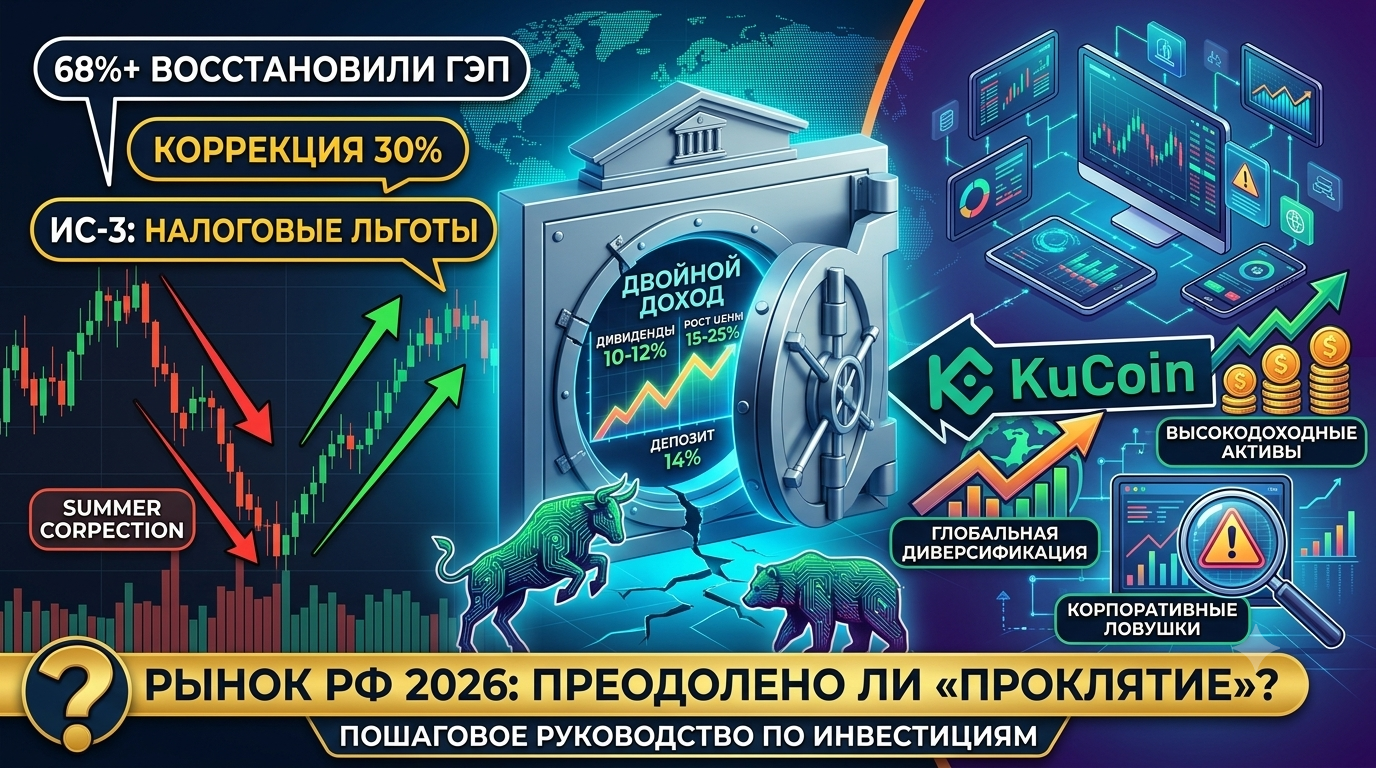
Has the Russian stock market managed to overcome the "curse" of the 2026 summer season? According to Moscow Exchange data as of early August 2026, more than 68% of stocks that paid dividends in the spring-summer period have already fully recovered their quotes to levels preceding the record date closure. This occurred despite a dramatic collapse of the MOEX Index in July, when the main benchmark fell below the psychological mark of 2000 points. Current dynamics confirm that the market has adapted to high volatility conditions, and investors have begun to approach asset selection more selectively, preferring companies with transparent dividend policies and stable cash flows.
In this article, we will conduct a deep analysis of the "dividend gap" cycle in 2026, break down the fundamental reasons for the massive 30% market correction at the start of the summer season, and provide a comparative analysis of stock yields versus traditional bank deposits in an era of gradually decreasing Bank of Russia key rates. You will receive a step-by-step guide to choosing the optimal entry moment, learn how to recognize and bypass "dividend traps," and discover which specific tax benefits and Individual Investment Account (IIA) mechanisms will help you maximize net profit in current economic realities. We will also touch upon issues of trust in institutional players and ways to protect capital from corporate manipulations.
Why Did the Russian Stock Market Collapse by 30% in Summer 2026?
The massive correction of the MOEX Index, which peaked in July 2026, was caused by a combination of the technical factor of "dividend ex-dates" for heavyweight companies and macroeconomic uncertainty. According to a report by Alfa-Investments analysts dated June 9, 2026, the market dropped below 2500 points for the first time since November 2025, triggering a wave of margin calls for retail investors who had massively bought stocks "for dividends" using borrowed funds. The main blow fell on the oil and gas sector, where total payments in spring-summer 2026 grew by 43% compared to last year, reaching ₽601.4 billion.
Many retail investors in 2026 made a classic psychological and strategic mistake: they "chased" quotes upward immediately before the record date, driven by irrational fear of missing out (FOMO) and hoping for instant profit fixation after the ex-dividend date. However, the harsh reality of the stock market, manifested on July 17, 2026, when the MOEX Index collapsed by 3.16% in just one trading session, showed the opposite: the price drop after dividend payments often exceeded the size of the payments themselves by 1.5 to 2 times. This led to mass disappointment and a situation where the income received was completely absorbed and nullified by catastrophic capital losses. This phenomenon, often referred to in professional circles as "interest received, principal halved" , became a harsh lesson for those who ignored market cycles and technical overbought conditions. Analysis shows that the main reason for this outcome was a lack of liquidity during mass sell-offs, when institutional players fixed profits while retail investors remained in "locked" positions.
A key pressure factor was the period of "high rates," which lasted longer than expected. Although the Bank of Russia lowered the key rate to 14% on July 24, 2026, it was still at the level of 14.25-14.5% in early summer, making risk-free instruments more attractive. Investors, frustrated by the slow closure of gaps in June, began moving funds into deposits and bonds, intensifying the downward trend.
Which Companies Closed Dividend Gaps Fastest in 2026?
The speed of quote recovery after a dividend gap in 2026 directly depended on companies' fundamental indicators and expectations for future payments. According to TradingView data as of August 9, 2026, two-thirds of stocks in the MOEX Index closed the gap in less than 45 trading days. Leaders were representatives of the financial and IT sectors, while metallurgists and retail showed more sluggish dynamics.
Special attention should be paid to Sberbank and oil and gas companies such as Gazprom Neft and Lukoil. Despite the general market correction, these issuers showed high resilience due to stable cash flow. Investors view them as "defensive" assets that generate income even under conditions of geopolitical turbulence. The table below provides a comparison of the average gap closure speed by sector in the 2026 summer season.
|
Economic Sector
|
Average Gap Size (%)
|
Closure Period (Days)
|
Percentage of Recovered Stocks
|
|
Financial (Sber, TCS)
|
8.5%
|
18
|
85%
|
|
Oil and Gas (Lukoil, Rosneft)
|
10.2%
|
35
|
72%
|
|
IT and Technology (Yandex, Positive)
|
4.1%
|
12
|
90%
|
|
Metallurgy (Severstal, NLMK)
|
7.8%
|
55
|
45%
|
|
Consumer Sector (Magnit)
|
6.5%
|
48
|
50%
|
According to BCS World of Investments data, the key condition for rapid stock recovery in 2026 was the presence of "growth drivers" besides the dividends themselves. For example, companies demonstrating operating profit growth above 30% per year closed gaps 2-3 times faster than the market. This confirms the thesis that buying stocks solely for a one-time payment without considering the general trend is a risky strategy.
Stocks vs. Deposits: Is the Risk Premium Sufficient at a 14% Rate?
Under conditions of a 14% annual key rate (Bank of Russia decision of July 24, 2026), Russian investors face the problem of an "insufficient risk premium." Bank deposits offer fixed returns without market fluctuations, while the stock market requires high psychological resilience from retail investors and readiness for portfolio drawdowns of 20-30%. However, long-term analysis shows that quality stocks possess dynamic growth potential unavailable to depositors.
A deposit is a capital preservation tool with limited returns. In 2026, the real return on deposits after inflation and taxes remains in the range of 2-4%. At the same time, buying dividend stocks at market "lows," as was the case in July 2026, allows an investor to realize a "double income" strategy: receiving dividend yield (10-12%) plus capital appreciation (15-25% during recovery).
It is important to clearly realize that the risk premium of stocks becomes truly attractive and justified only when company valuations drop to extremely low levels according to key multiples such as P/E (price-to-earnings) and EV/EBITDA (enterprise value to EBITDA). In August 2026, a significant portion of Russian "blue chips" are trading at a substantial discount to their historical averages over the last five years, opening a unique window of opportunity for forming a balanced investment portfolio using a hybrid "Deposits + Dividend Stocks" model. For a conservative investor seeking capital protection from inflation while maintaining liquidity, the optimal configuration in current macroeconomic conditions is a distribution of 60% of total capital into high-yield savings accounts or short-term bonds and 40% into stocks of market leaders with a transparent and predictable dividend gap closure cycle. Such a strategy allows not only for a stable cash flow but also for participation in potential market capitalization recovery as the regulator further eases monetary policy. Moreover, dynamic dividend payment growth in the long term serves as a powerful tool for protection against money devaluation, while deposit returns are strictly tied to nominal rates and do not account for real economic growth.
Tax Optimization: Dividends vs. Deposits and the Role of IIA in 2026
One of the decisive factors when choosing between stocks and deposits is the tax burden. In 2026, a progressive taxation scale continues to operate, but rules for deposits and dividends differ significantly. For investors, it is critically important to correctly calculate "net" yield after personal income tax (PIT) to objectively compare instruments.
According to current Russian legislation, the tax on deposits is calculated using the formula: "Maximum Bank of Russia key rate for the year × 1 million rubles = tax-free amount." Given that the rate reached high values in early 2026, the tax-free income limit for many will be around ₽140,000–150,000. Everything earned above this amount on deposits is taxed at 13% (or 15% for income over 5 million rubles). Dividends, however, are taxed at the source of payment without any deductions, making them less advantageous from a "tax shield" perspective unless special instruments are used.
Active use of the Type 3 Individual Investment Account (IIA-3), which became standard in 2026, is turning into a mandatory and critically important element of financial strategy for any retail investor striving for long-term success. The IIA-3 mechanism offers a unique combination of benefits that significantly increase the mathematical expectation of profit. First, the investor retains the right to receive an annual tax deduction on contributions of up to ₽52,000 or ₽60,000, which is effectively equivalent to an instant guaranteed return on invested capital. Second, IIA-3 provides full exemption from tax on all accumulated investment profit, provided the minimum account holding period is observed, which is especially valuable during periods of rapid market growth after deep corrections. Third, the possibility of reinvesting dividends within the account without immediate PIT withholding (subject to setting appropriate parameters with the broker) launches a powerful compound interest effect, allowing capital to grow significantly faster than in a regular brokerage account. Thus, IIA acts as a "tax oasis," protecting investor income from fiscal pressure and allowing for more effective competition with bank products in terms of net yield. For those operating with amounts over several million rubles, IIA-3 becomes an uncontested tool as it allows for legal optimization of the tax base, which in a standard approach could consume up to 15% of all earned profit.
For clarity, let's compare the tax efficiency of various instruments in 2026 with a hypothetical capital of 2 million rubles.
|
Comparison Parameter
|
Bank Deposit (14%)
|
Dividend Stocks (12%)
|
Stocks on IIA-3 (12% + deduction)
|
|
Gross Income (₽)
|
280,000
|
240,000
|
240,000
|
|
Taxable Base
|
Above limit (₽140,000)
|
Entire income amount
|
0 (if period is met)
|
|
Tax Amount (13% PIT)
|
18,200
|
31,200
|
0
|
|
Tax Deduction on Contribution
|
No
|
No
|
Up to 52,000 / 60,000
|
|
Total Net Benefit
|
261,800
|
208,800 (+ price growth)
|
292,000–300,000
|
As seen from the calculations, IIA-3 ensures maximum financial efficiency, allowing the investor not only to preserve what was earned but also to receive an additional bonus from the state, which is critically important in high inflation conditions.
How to Avoid Corporate Traps and Capital "Dilution"?
Retail investor trust in the Russian market in 2026 remains fragile. The main risks undermining faith in long-term stock ownership are non-transparent corporate actions, such as secondary public offerings (SPOs/Additional Emissions) and reporting manipulations. Under conditions of sanctions pressure and geopolitical instability, some majority shareholders and company management put their interests above those of minority shareholders, creating "value traps."
A classic example of a "value trap" is a company that pays high dividends but simultaneously announces an additional emission that dilutes existing shareholders' stakes. Consequently, the stock price falls by an amount exceeding the dividend and does not recover for years. To avoid such a situation, investors in 2026 should adhere to the following rules:
-
Corporate Governance Analysis: Avoid companies with a history of unfriendly actions toward minority shareholders.
-
Ignoring Media "Noise": Financial media often broadcast the positions of major players. Always verify facts through primary sources and information disclosure servers (Interfax-CRKI).
-
Debt Load Control: In an era of high rates, companies with a Net Debt / EBITDA ratio above 2.5 are at the highest risk of canceling dividends in favor of debt service.
Be vigilant and maintain neutrality. The 2026 market does not forgive blind optimism. Only a critical look at reporting and understanding the motivations of major shareholders will allow you to preserve capital during periods of turbulence.
Should You Trade High-Yield Assets on KuCoin?
While the Russian stock market offers opportunities in the traditional stock segment, modern investors are increasingly turning to global platforms to diversify their portfolios. The KuCoin exchange provides access to a wide range of high-yield instruments that can serve as an excellent addition to a dividend strategy on the RF market, especially during local MOEX Index collapses.
Trading on KuCoin allows investors to leverage the advantages of the cryptocurrency market, where yields from stablecoin staking or participation in KuCoin Earn often exceed the dividend yields of top Russian companies. Furthermore, access to assets denominated in hard currency helps hedge currency risks that inevitably arise when investing exclusively in ruble instruments.
For those looking for an alternative to "dividend gaps," KuCoin offers:
-
KuCoin Earn: Products with fixed and flexible yields, allowing for daily passive income.
-
Spot Trading: Access to hundreds of promising tokens with high capitalization growth potential.
-
Futures Market: The ability to earn on asset declines, which is particularly relevant during market corrections like the one observed in summer 2026.
Registration on KuCoin opens doors to global liquidity and tools unavailable on local platforms. If your goal is to maximize profit and protect capital from local risks, integrating cryptocurrency assets into an overall investment strategy is a logical step in 2026.
Join KuCoin 9th Anniversary Trading Campaign
KuCoin is celebrating its 9th anniversary with a special platform campaign filled with exclusive rewards, trading activities, and limited-time offers. Don’t miss the chance to participate and enjoy the benefits as the exchange marks nine years of growth and innovation. Visit the official campaign page now:

Conclusion
Summarizing the 2026 dividend season, it can be stated that the Russian market demonstrated surprising resilience. Despite a 30% correction in early summer and the MOEX Index falling below 2000 points, two-thirds of stocks managed to close dividend gaps by mid-August. This became possible due to companies' adaptation to new economic realities and the gradual reduction of the Bank of Russia key rate to 14%.
However, investors should not relax. The 2026 experience showed that a "buying for the ex-date" strategy without deep analysis of fundamental indicators and corporate governance can lead to serious losses. The risk premium in the stock market remains under pressure from high deposit rates, and tax nuances require the use of IIAs to maintain investment efficiency. In the future, success will follow those who know how to combine traditional dividend instruments with global assets on platforms like KuCoin, maintaining a balance between yield and protection against capital "dilution" risks.
Frequently Asked Questions (FAQs)
1. How to calculate the approximate period for closing a dividend gap?
The gap closure period depends on the company's profit growth rates and market sentiment. In 2026, the average period for market leaders is between 15 and 45 days. If a company shows revenue growth of more than 20% per year, the probability of rapid gap closure (up to 20 days) increases significantly.
2. What is more profitable in 2026: stocks or a bank deposit?
The choice depends on your planning horizon. At a 14% key rate, deposits provide stability, but stocks offer "double income" potential (dividends + price growth). For long-term investors (3+ years), stocks on IIA remain a more profitable tool due to tax deductions and the absence of a yield "ceiling."
3. Should I sell stocks immediately after dividend payment?
Selling stocks on the ex-date usually makes no sense, as the price falls by the dividend amount. The best strategy is either to hold the stocks until the gap closes or to buy them at the gap if you believe in the company's long-term prospects. In 2026, buying on the post-payment dip brought investors an average of 5-8% additional profit in a month.
4. What taxes will I pay on dividends in 2026?
PIT is withheld from Russian company dividends at a rate of 13% (or 15% if your total annual income exceeds 5 million rubles). The tax is withheld automatically by the broker; you do not need to file a declaration yourself unless you receive dividends from foreign issuers.
5. How to protect against stake "dilution" during an additional emission?
The only reliable way is to carefully study the company's charter and minutes of shareholder meetings. If a company regularly resorts to additional emissions without a clear justification for its investment program, it is a signal to exit the asset. In 2026, investors began punishing such companies more severely with sell-offs, making "dilution" one of the year's main risks.
Disclaimer : This material is provided for informational purposes only and does not constitute financial, investment, legal, or tax advice. Transactions involving cryptocurrencies and tokenized assets carry substantial risks — including price volatility, limited liquidity, counterparty exposure, and the potential for total loss of invested capital. Readers should conduct their own research and, where appropriate, consult a qualified professional before making any financial decisions.