

Apple Enters a New Era Under John Ternus as AI Labs Turn to Mac Hardware
Introduction
Apple entered a new leadership chapter on September 1, 2026, as John Ternus succeeded Tim Cook as CEO after Cook’s 15-year tenure. The transition comes as AI is increasingly shaping both Apple’s hardware strategy and investor expectations.
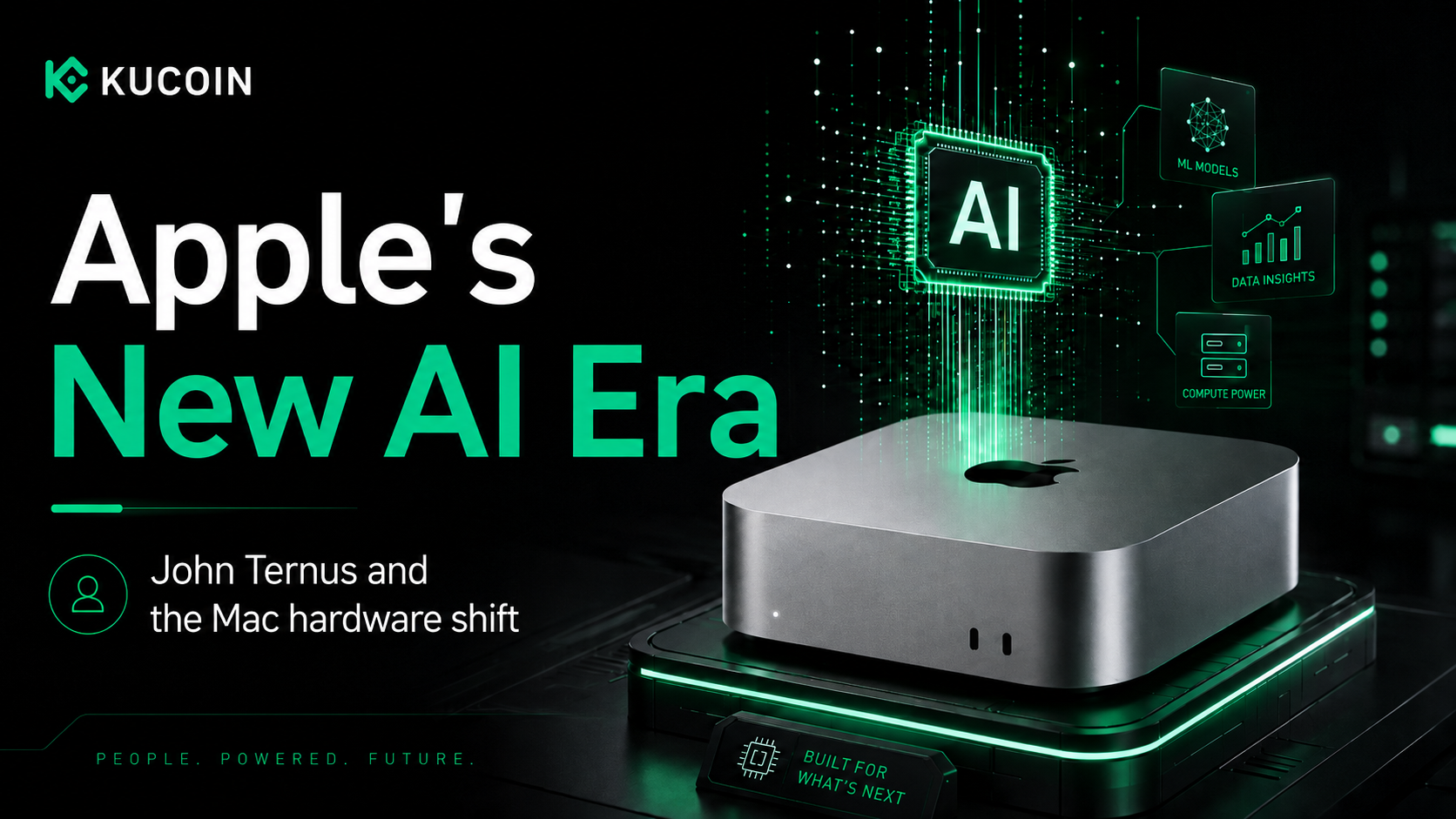
At the same time, Apple’s Mac lineup is finding a new role in AI infrastructure. Recent reporting indicated that OpenAI purchased tens of thousands of Mac mini and Mac Studio systems for reinforcement learning and computer-use agent training, while Anthropic has been accessing similar Mac capacity through AWS.
Apple silicon’s unified-memory architecture is a key reason. It allows large quantized models to run without constantly moving data between separate GPU memory and system RAM. That demand helped Mac revenue reach approximately $10.35 billion in the fiscal third quarter ended June 27, 2026, up nearly 29% year over year.
The leadership change is therefore more than symbolic. Ternus now has to prove that Apple can turn custom silicon, AI capabilities, and new hardware categories into its next major growth cycle.
Why Did Apple Choose John Ternus as Its Next CEO?
Apple’s choice of John Ternus signals a stronger focus on hardware innovation and AI-era product development. Ternus joined Apple in 2001, became vice president of hardware engineering in 2013, and was promoted to senior vice president of hardware engineering in 2021. Over roughly 25 years, he moved from Mac engineering into leadership roles across iPad, AirPods, iPhone, and the broader hardware portfolio.
Tim Cook’s tenure was defined by supply-chain execution, services growth, and operational discipline. Apple’s current challenge is different: investors increasingly want to see whether the company can create new products for the AI era.
Cook remains executive chairman, reducing the risk of an abrupt leadership break. Ternus’s first major test will be Apple’s upcoming product cycle, including a new iPhone lineup, a more capable Siri AI experience, a foldable iPhone, and a smart display.
Why Are OpenAI and Other AI Labs Using Macs?
OpenAI reportedly acquired tens of thousands of Mac mini and Mac Studio systems for reinforcement learning and computer-use agent training.
Computer-use agents need to view screens, click, type, recover from errors, and repeat these actions across many environments. That workload differs from conventional frontier-model pretraining and can benefit from running many complete computers in parallel.
This is where compact Mac systems become useful. Anthropic has taken a different approach by renting Mac compute capacity through AWS rather than purchasing hardware directly.
The key point is that Apple did not originally position the Mac mini or Mac Studio as dedicated enterprise AI products. AI labs independently found that these systems fit a growing class of agent workloads.
What Makes Apple Silicon Useful for AI?
The main technical advantage is unified memory. In Apple silicon, the CPU, GPU, and Neural Engine access the same memory pool, reducing the need to move data between separate GPU memory and system RAM.
That makes high-memory Macs useful for large quantized models, local inference, reinforcement-learning rollouts, and computer-use agents.
This does not mean Macs are replacing NVIDIA GPUs for frontier-model pretraining. Instead, Apple hardware is gaining traction in a more specialised part of the AI stack, particularly local inference and agent workloads.
How Important Has Mac Become to Apple’s Growth?
Apple reported $10.352 billion in Mac net sales for the quarter ended June 27, 2026, compared with $8.046 billion a year earlier, representing growth of roughly 29%.
Apple’s total revenue for the quarter reached $109.4 billion, up 16% year over year. Mac remains smaller than iPhone and Services in absolute terms, but its growth rate stands out.
Strong demand also creates a challenge. Shortages of high-memory Mac configurations suggest Apple was not fully prepared for enterprise and AI-lab buyers purchasing these systems at scale.
Which Products Could Define Apple’s Next AI Cycle?
Apple’s next AI phase will likely depend more on consumer-facing devices than on Mac sales to AI labs alone.
Expected products include a new iPhone generation, an upgraded Siri AI experience, a foldable iPhone, and a smart display capable of recognising speakers and personalising content.
The broader strategy appears to combine custom silicon, AI software, and new hardware surfaces. Longer-term possibilities reportedly include camera-equipped AirPods, smart glasses, home-security hardware, and robotic home displays.
If these products create practical everyday uses for AI, Apple could strengthen its position in the next technology cycle.
What Does This Mean for Apple’s Valuation?
The CEO change itself is unlikely to be the main valuation catalyst. The more important question is whether Apple can build a successful AI-driven product cycle.
OpenAI and Anthropic using Macs does not make Apple an AI-model company. It does, however, show that Apple silicon has become useful infrastructure for emerging AI workloads.
If Apple can combine this technical advantage with stronger Siri capabilities and new device categories, investors may begin to view the company less as a late participant in generative AI and more as a platform where AI agents can operate.
What Could Apple’s AI Shift Mean for Crypto Markets?
Apple’s AI strategy is not a direct crypto catalyst, but it matters to the broader digital-asset market through technology investment, computing demand, liquidity, and risk appetite.
AI and crypto both depend on infrastructure such as semiconductors, data centres, and capital investment. Strong AI spending can support broader technology sentiment, while tighter financial conditions can weigh on both technology equities and digital assets.
It is therefore useful to monitor major developments in AI, semiconductor demand, monetary policy, and global technology investment alongside crypto-specific catalysts.
How Can Australian Users Access Crypto on KuCoin AU?
Australian users can access supported digital assets on KuCoin AU after completing registration and identity verification.
Fund Your KuCoin AU Account
Users can deposit supported AUD or crypto assets before purchasing digital assets.
Access Spot Markets
Eligible users can access supported Spot trading pairs and use standard market or limit orders.
Use Fast Trade for Simpler Purchases
Users who prefer a simpler purchase process can use supported KuCoin AU Fast Trade services without navigating a traditional order-book interface.
Conclusion
Apple’s transition from Tim Cook to John Ternus comes at a moment when its hardware is finding a new role in the AI ecosystem. OpenAI has reportedly purchased tens of thousands of Mac mini and Mac Studio systems for reinforcement learning and computer-use agents, while Anthropic is accessing similar infrastructure through AWS.
Apple silicon’s unified-memory architecture is one reason these machines are attractive for local inference and agent workloads. The commercial impact is also visible, with Mac revenue reaching approximately $10.35 billion in Apple’s latest reported quarter, up nearly 29% year over year.
Ternus’s success will depend on whether Apple can turn custom silicon and AI capability into compelling consumer products. The next iPhone generation, Siri AI upgrades, foldable devices, and smart-home hardware will provide early evidence.
For investors, the bigger question is not simply who runs Apple, but whether AI, custom chips, and new hardware categories can create another major product era.
FAQs
Did Tim Cook leave Apple completely?
No. Tim Cook became executive chairman and continues to support Apple in areas including government and policy engagement.
Why did OpenAI purchase so many Macs?
The systems are reportedly being used for reinforcement learning and computer-use agent workloads that require many complete computer environments.
What makes Apple silicon useful for AI?
Its unified-memory architecture allows the CPU, GPU, and Neural Engine to access the same memory pool, which can benefit large quantized models and local AI workloads.
Are Macs replacing NVIDIA GPUs for AI training?
No. NVIDIA GPUs remain central to large-scale frontier-model pretraining. Macs are gaining traction mainly in areas such as local inference and computer-use agents.
How fast is Apple’s Mac business growing?
Mac revenue reached approximately $10.352 billion in the latest reported quarter, up roughly 29% year over year.
Disclaimer
This article is for informational purposes only and does not constitute financial, legal, or investment advice. Always conduct your own research before interacting with digital assets.