

Top Crypto Miner Tips: Machines & Software Guide 2026
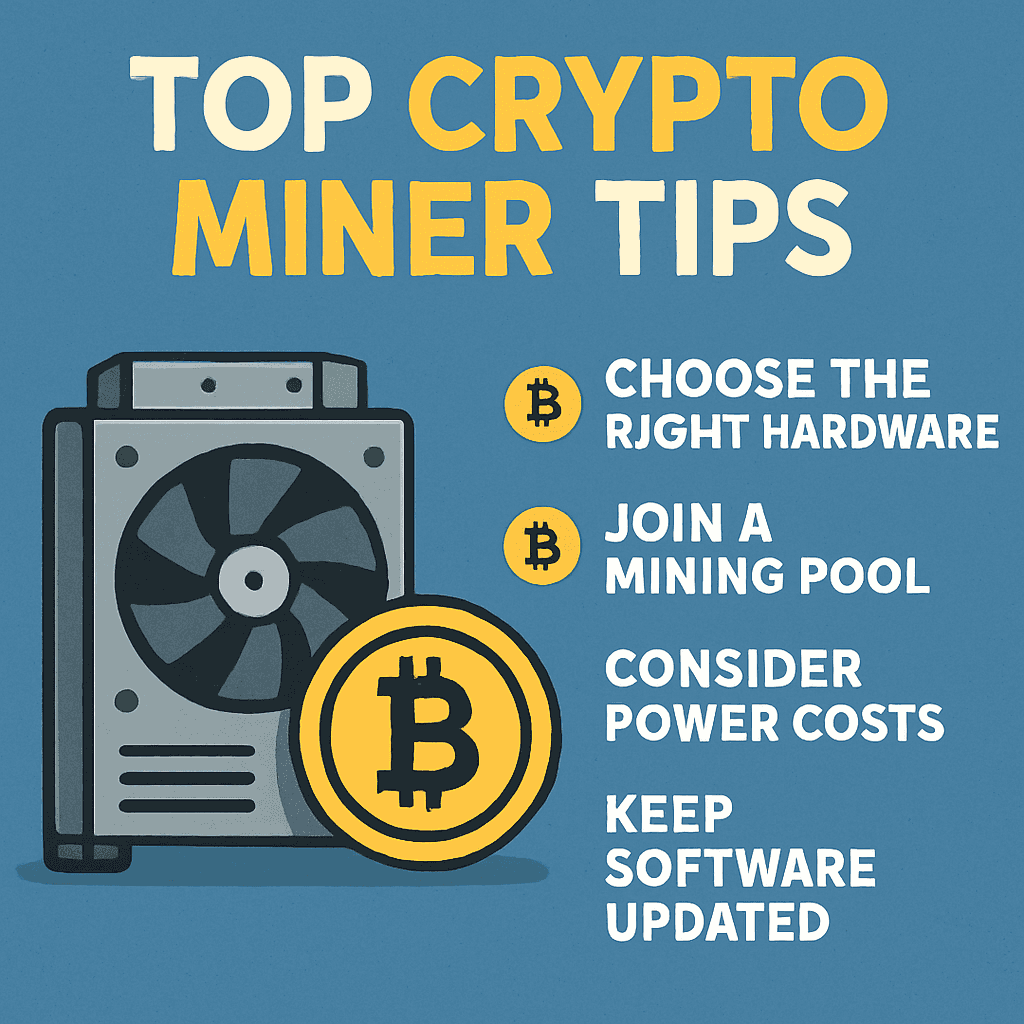
Cryptocurrency mining remains a cornerstone of the digital economy in 2026. With Bitcoin reaching record highs—surpassing $122,000 in mid-2025—the incentive to secure the network is stronger than ever. However, as the network difficulty rises, successful mining now requires a blend of high-efficiency hardware, smart software, and strategic local operations.
Whether you are looking to mine Bitcoin, Dogecoin, or any other mineable cryptocurrency, this guide provides the technical breakdown you need to build a profitable operation.
-
Top Crypto Mining Machines (Hardware)
In 2026, the market is dominated by ASICs (Application-Specific Integrated Circuits) for major coins, while GPU rigs remain the go-to for flexible altcoin mining.
Best Bitcoin ASIC Miners (SHA-256)
For Bitcoin mining, efficiency (measured in Joules per Terahash, or J/TH) is the most critical metric.
-
Bitmain Antminer S21e XP Hyd: The current gold standard for 2026. It features hydro-cooling, offering a massive 860 TH/s with an efficiency of 13 J/TH.
-
Antminer S23: The next-generation air-cooled model, delivering 318 TH/s. It is preferred for professional hosting centers that want to avoid the complexity of liquid cooling.
-
MicroBT Whatsminer M66S++: A powerful alternative with a hash rate of 356 TH/s, known for its thermal stability and durable circuitry.
-
Canaan Avalon Q: A beginner-friendly ASIC with a lower power draw (1,600W), making it suitable for home setups with proper ventilation.
Best Altcoin Mining Hardware
-
Scrypt Miners (DOGE/LTC): The VolcMiner D1 Hydro and ElphaPex DG2+ lead the market for Scrypt-based coins, offering high gigahash rates for those looking beyond Bitcoin.
-
zkSNARK Miners (ALEO): The IceRiver ALEO AE1 Lite is a specialized, affordable ASIC tailored for privacy-focused protocols.
-
Essential Mining Software for 2026
Software is the interface that connects your hardware to the blockchain. Choosing the right one can increase your efficiency by 5–10% through auto-optimization.
For Professionals and Farm Managers
-
Hive OS: A dedicated Linux-based operating system that replaces Windows. It allows for remote monitoring, bulk overclocking, and automated "flight sheets" to switch between coins instantly.
-
Awesome Miner: Ideal for managing large fleets of ASICs and GPUs from a single dashboard. It includes advanced scripting and real-time profitability tracking.
For Beginners and Home Miners
-
NiceHash: The easiest entry point. It functions as a marketplace where you sell your hash power to others and get paid in Bitcoin. It features an "Auto-Profitability" switch that always mines the most lucrative algorithm.
-
EasyMiner: A graphical interface (GUI) wrapper for more complex command-line miners. It’s perfect for those who want to avoid technical terminal commands.
-
Cudo Miner: Known for its user-friendly interface and "Smart Mining" features that pause when you are using your PC for other tasks.
-
The Australian Mining Landscape
Australia is uniquely positioned in 2026 as a crypto mining hub due to the widespread adoption of renewable energy and favorable regulatory clarity.
Strategy for Success in Australia
-
Solar & Storage: With rising grid electricity costs, many Australian miners now pair their rigs with solar arrays. Successful home miners often run "Green Mining" operations, powering rigs only during peak solar production hours to keep costs near $0.00/kWh.
-
Cooling Challenges: Given the Australian climate, noise and heat management are paramount. Many pro-sumers are moving toward Immersion Cooling, where machines are submerged in non-conductive dielectric fluid to eliminate fan noise and handle high ambient temperatures.
-
Step-by-Step Setup Guide
-
Calculate ROI: Use a calculator like WhatToMine. Factor in your hardware cost, electricity rate (aim for under $0.08/kWh for profitability), and network difficulty.
-
Choose a Mining Pool: Solo mining is nearly impossible in 2026. Join a reputable pool like Kucoin Pool, F2Pool, or Foundry USA to earn steady, predictable payouts.
-
Configure a Secure Wallet: Use a non-custodial hardware wallet (e.g., Ledger or Trezor) to receive your rewards. Avoid mining directly to exchange wallets.
-
Optimize & Monitor: Use your software to set temperature triggers. Rigs should ideally stay between 60–80°C.
Summary Table: Mining Choices 2026
| Option | Initial Cost | Pro | Con |
| Home ASIC Setup | $2,000–$10,000 | Full control & learning | High noise & heat |
| GPU Rig | $1,500–$5,000 | Flexibility (mine many coins) | Less efficient for BTC |
| Hosted Mining | $500–$3,000 | No maintenance required | Monthly fees; less control |
| Mobile Apps | $0 | Ultra-low barrier to entry | Negligible earnings |
Crypto mining is a marathon, not a sprint. By selecting the right hardware and staying adaptable to network changes, you can turn your computer's power into a consistent digital asset stream.