

Wyckoff Method 2026: Identifying the "Spring" in 15m Charts
Key Takeaways
-
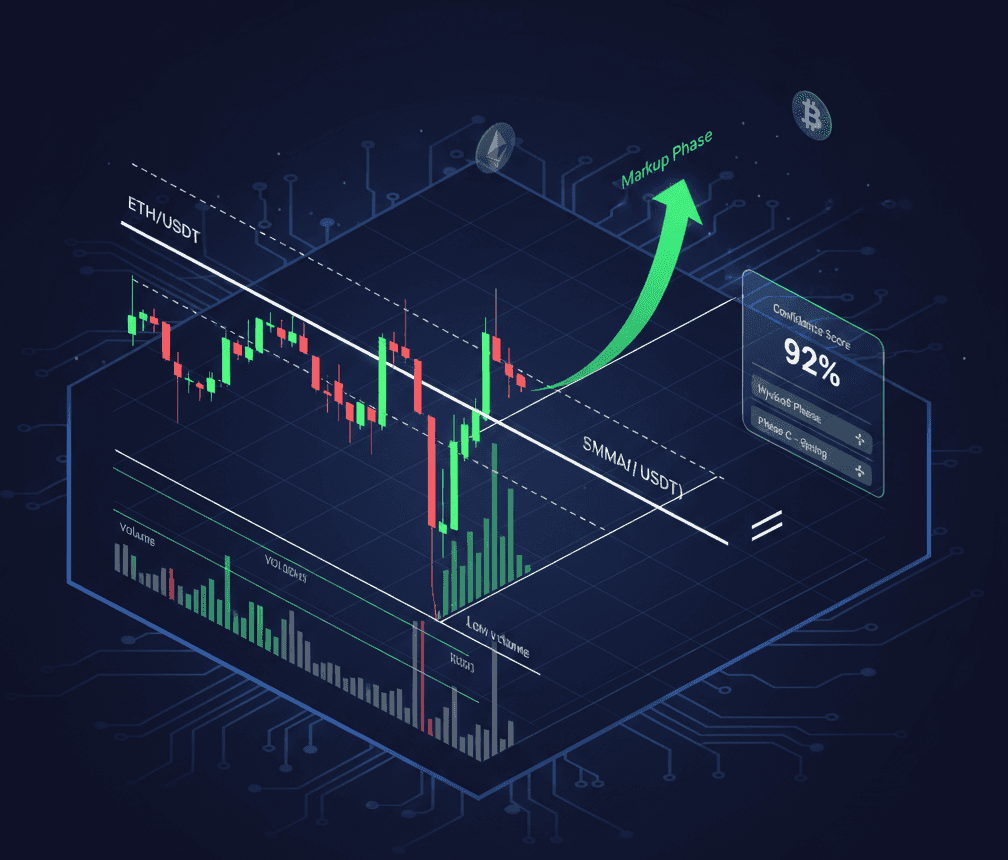
The Ultimate Bear Trap: The "Spring" is a deliberate move below support designed to trigger retail stop-losses and provide liquidity for large-scale buy orders.
-
15m Precision: In 2026, the 15-minute timeframe is the optimal "sweet spot" for spotting the Wyckoff Spring Strategy, offering enough detail to see volume exhaustion without the noise of 1m charts.
-
Volume is the Key: A valid Spring must be confirmed by a specific volume profile—high volume on the dip followed by a low-volume "Test" of the support line.
-
KuCoin Execution: Utilizing the deep order books on KuCoin Markets allows traders to enter the "Markup" phase with minimal slippage once the Spring is confirmed.
In the fast-paced digital asset markets of February 2026, the battle between retail sentiment and institutional liquidity has reached a fever pitch. While many traders rely on lagging indicators, the elite have returned to a century-old methodology that remains undefeated: The Wyckoff Method. Specifically, Wyckoff Method 2026: Identifying the "Spring" in 15m charts has become the go-to strategy for day traders seeking to capitalize on institutional "shakeouts" before a massive price markup.
Mastering the Wyckoff Spring Strategy is about more than just reading a chart; it is about understanding the psychology of the "Composite Man"—the collective force of large institutional players who orchestrate market movements to seek liquidity.
-
The Core Logic of Wyckoff Method 2026
The Wyckoff Method is built on the Law of Supply and Demand, the Law of Cause and Effect, and the Law of Effort vs. Result. In 2026, these laws are amplified by algorithmic trading. The "Spring" occurs during Phase C of an accumulation schematic. It is the final "test" of the market's supply before the price begins its sustained uptrend.
Why the "Spring" Happens
Institutions need "sell-side liquidity" to fill their massive buy orders. By pushing the price briefly below a well-established support level on KuCoin, they trigger thousands of retail stop-loss sell orders. This allows the "Composite Man" to buy a large volume of tokens without significantly driving up the price at least initially.
Identifying this move on a 15m chart requires patience. As noted in the latest KuCoin Blog strategy guides, the most profitable traders are those who wait for the "Spring" to complete and the price to reclaim the trading range before entering.
-
Identifying the "Spring" on 15m Charts
The 15-minute chart is uniquely positioned for Wyckoff Method 2026: Identifying the "Spring" in 15m charts. It provides a clear view of the "Three Types of Springs" that define modern market structures.
Type 1: The Terminal Shakeout
This is a violent move below support with high volume. In 2026, these are often driven by news events. Because the volume is high, it indicates there are still active sellers. A "Test" of this level is mandatory before entry.
Type 2: The Moderate Spring
The price dips below support with moderate volume. The recovery is relatively quick. This indicates that while supply was present, it was easily absorbed by the buyers on KuCoin Markets.
Type 3: The Exhaustion Spring
The most bullish signal. The price breaks support at very low volume, showing that there are no sellers left. This is often followed by an immediate and aggressive "Sign of Strength" (SOS).
Traders using the KuCoin Lite version can benefit from simplified chart views to mark these key support levels, making it easier to see when a price "wick" is merely a liquidity grab rather than a trend reversal.
-
Step-by-Step Strategy: Trading the Spring
To successfully trade the Wyckoff Spring Strategy, you must follow a disciplined four-step process.
-
Define the Range: Look for a trading range that has been established for at least 48-72 hours. Mark the Support and Resistance clearly.
-
Monitor the Breakdown: Watch for a 15m candle to close below support. Check the volume. Is it an "Effort" without a "Result"? (i.e., high volume but the price isn't falling further).
-
Wait for the Reclaim: The trade is only valid once the price closes back inside the range. This confirms the "Bear Trap."
-
Entry to the Test: After the reclaim, the price will often dip back toward the support line at a very low volume. This is your high-probability entry point.
Stay alert to official KuCoin announcements regarding wallet maintenance or network upgrades, as these can sometimes cause artificial price "wicks" that look like springs but are actually technical glitches or low-liquidity events.
Conclusion: Mastering the Art of the Trap
The Wyckoff Spring Strategy is a masterclass in reading institutional intent. In 2026, where market manipulation and algorithmic sweeps are common, the "Spring" remains the most reliable signal for a trend reversal. By focusing on Wyckoff Method 2026: Identifying the "Spring" in 15m charts, you align yourself with the "Smart Money" flows on KuCoin. Remember, the market is designed to fool the majority; the Wyckoff Method is your tool to stay among the minority that profit.
FAQs for “Wyckoff Spring Strategy: 2026 Guide”
What is the most important indicator for a Wyckoff Spring?
Volume. Without volume analysis, a spring is indistinguishable from a genuine breakdown. A valid spring must show supply exhaustion (decreasing volume) as the price recovers into the range.
Can I trade a spring on higher timeframes?
Yes, but the 15m chart is ideal for capturing the initial shift in momentum. Daily or Weekly Springs are powerful macro signals, but they offer much wider stop-loss requirements compared to intraday setups on KuCoin Markets.
Does every dip below support a spring?
No. If the price fails to reclaim the range within a few candles and volume remains high on the sell-side, it is a "Change of Character" (CHoCH) toward a bearish trend, not a Spring.
Why is the 15m timeframe better than the 1m?
The 1m chart is filled with "High-Frequency Trading" noise that can create dozens of fake Springs every hour. The 15m chart filters this noise while still providing an early entry before the 1-hour or 4-hour traders see the signal.
Where can I find more Wyckoff education?
The KuCoin Blog features regular technical analysis series that dive deep into market structure, accumulation schematics, and institutional trading logic.
Trade the Institutional Reversal
-
Access Premium Liquidity: Sign in to KuCoin
-
Spot Intraday Springs: KuCoin Markets Real-Time Charts
-
Master Professional Trading: Visit KuCoin Blog
-
Latest Market Insights: Check KuCoin Announcements