

How to Use KuCoin EU Cross Margin
This guide explains the operational steps involved in using Cross Margin Trading on the KuCoin EU platform. Margin trading involves borrowing digital assets using collateral and is a high-risk activity. Losses can exceed the initial amount of collateral. This document does not constitute investment advice or a suitability assessment under MiCAR or MiFID. Users should ensure they fully understand the mechanics and risks associated with leverage, borrowing, interest costs, and liquidation before engaging in margin trading.
For more detailed information about margin trading, you can click here to learn more.
Overview of Cross Margin Trading Process
Once you have enabled margin trading on KuCoin EU, there are four essential steps to completing a margin trade:
1. Transfer Collateral to your Margin Account
2. Borrow funds
3. Execute Margin Trades (Buy/Long or Sell/Short)
4. Repay borrowed assets
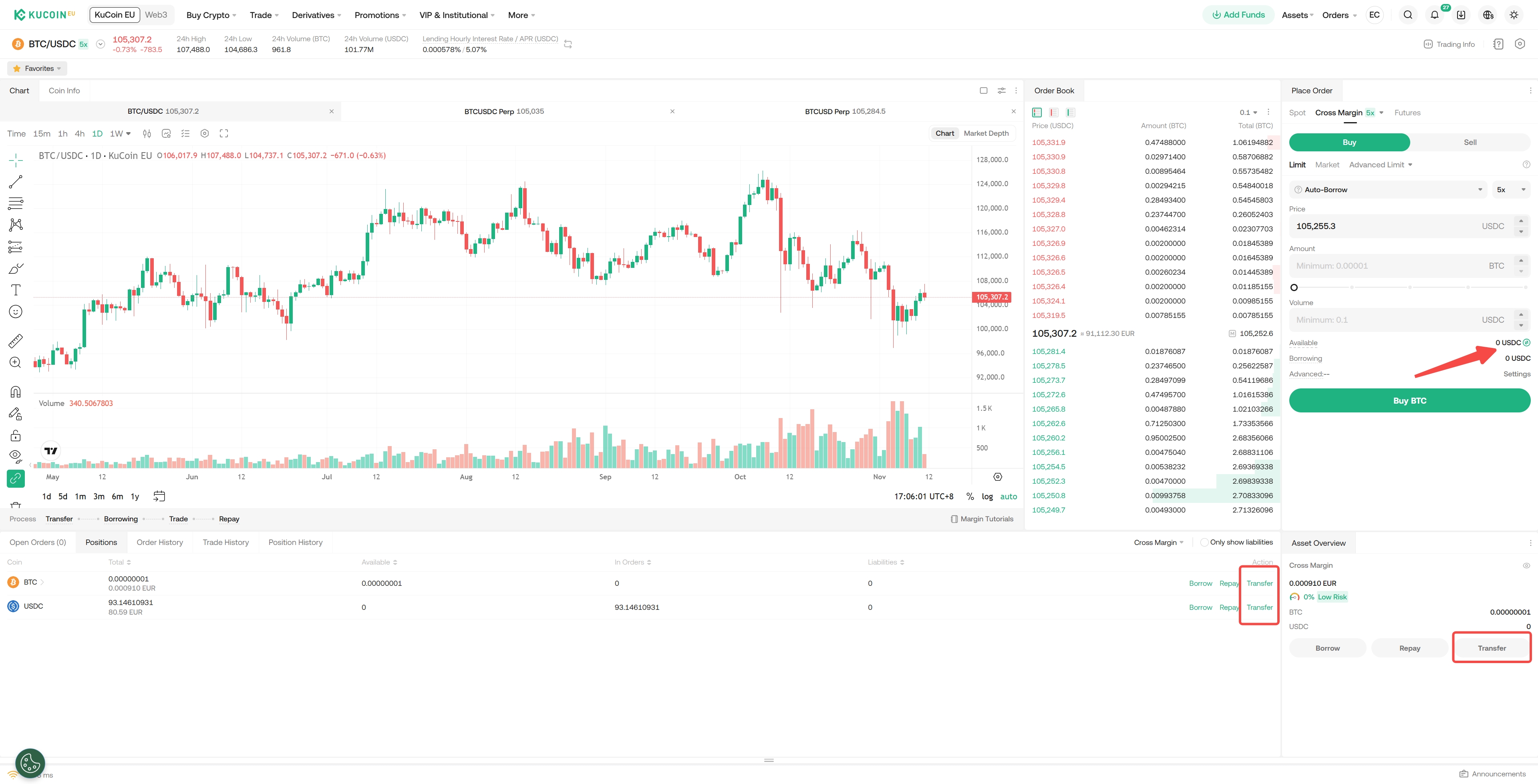
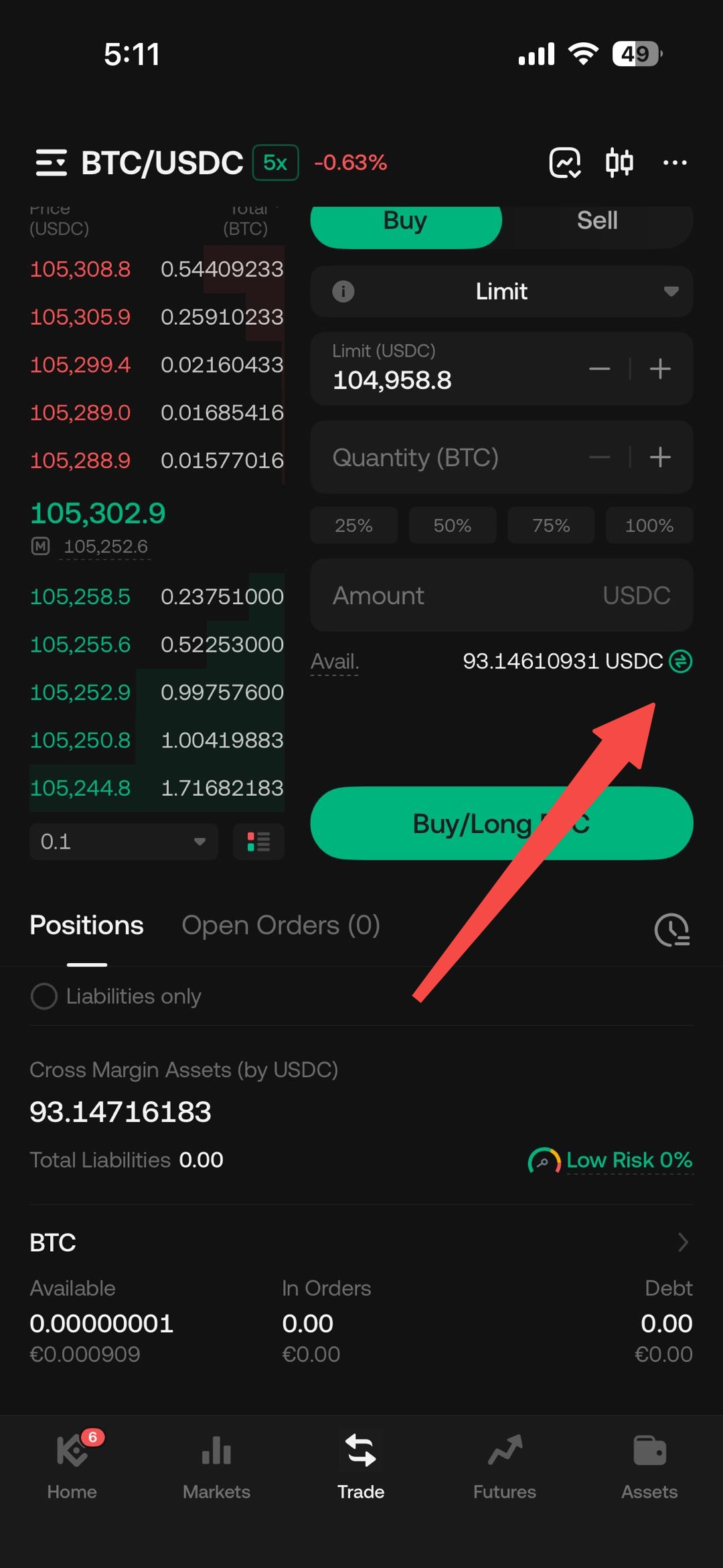
1. Transfer principal to your margin account
To begin trading on margin, you must transfer funds (any currency supported for margin trading) to your Margin Account.
Note: Any currency supported on Margin trade can be transferred.
Web:
App:
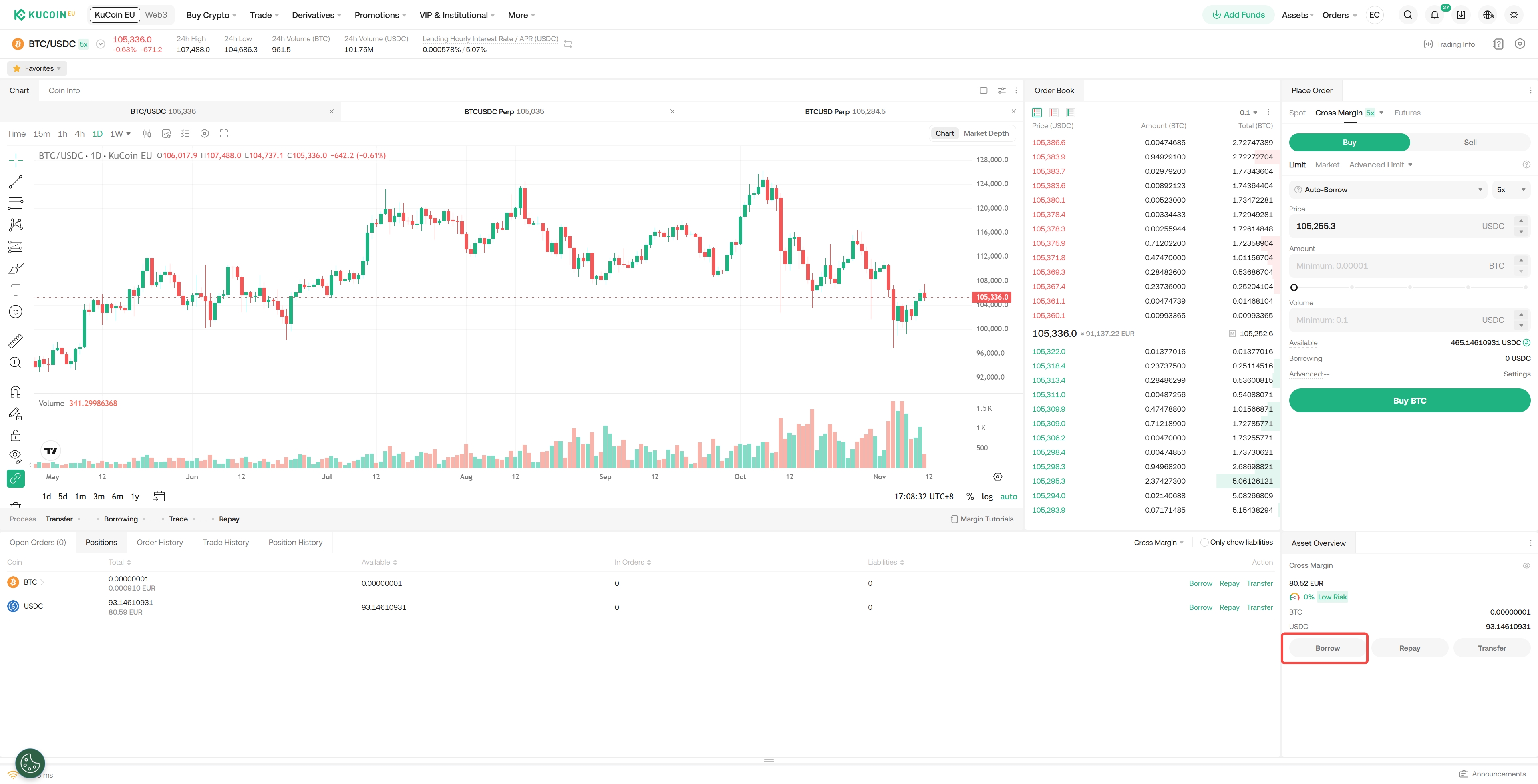
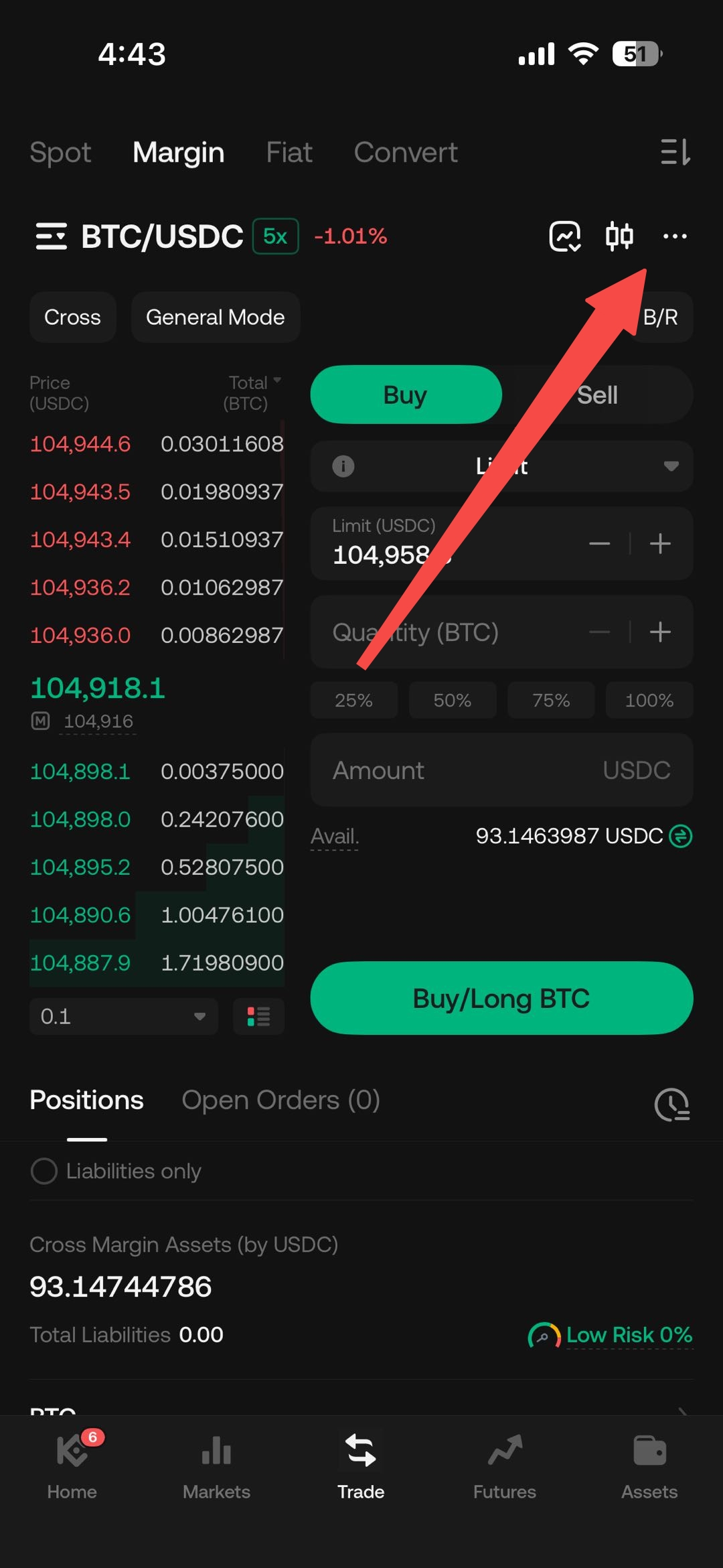
2. Borrowing Funds
After transferring collateral, users may borrow supported assets. Borrowing increases liabilities and immediately begins accruing interest.
Risk Warning: Borrowing to trade increases risk exposure. Losses can exceed initial collateral, and forced liquidation may occur if the debt ratio reaches platform-defined thresholds. Users should ensure they understand the risks associated with leverage before borrowing funds.
Web:
App:
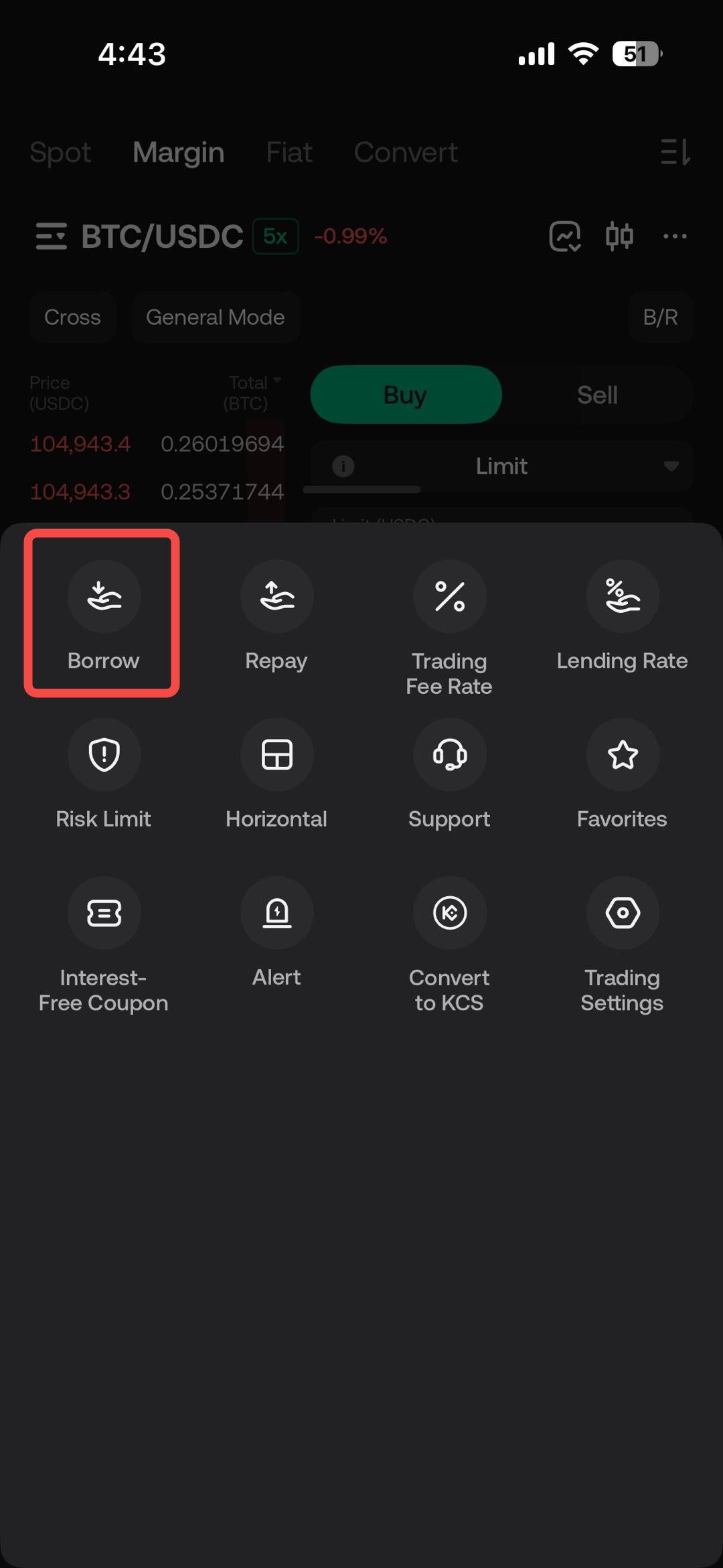
3. Executing Margin trades (Buy long/Sell short)
-
Buy Long:
Here's an example: If you want to buy BTC using the BTC/USDC trading pair, you can use the borrowed USDC to purchase BTC. -
Close Position:
When BTC's price increases, sell the BTC you previously bought back to USDC to lock in your profit.
Note: Margin trading operates exactly the same as spot trading and utilizes the same market depth for transactions. These examples illustrate how the system functions and do not imply expected outcomes, profit potential, or trading strategies.
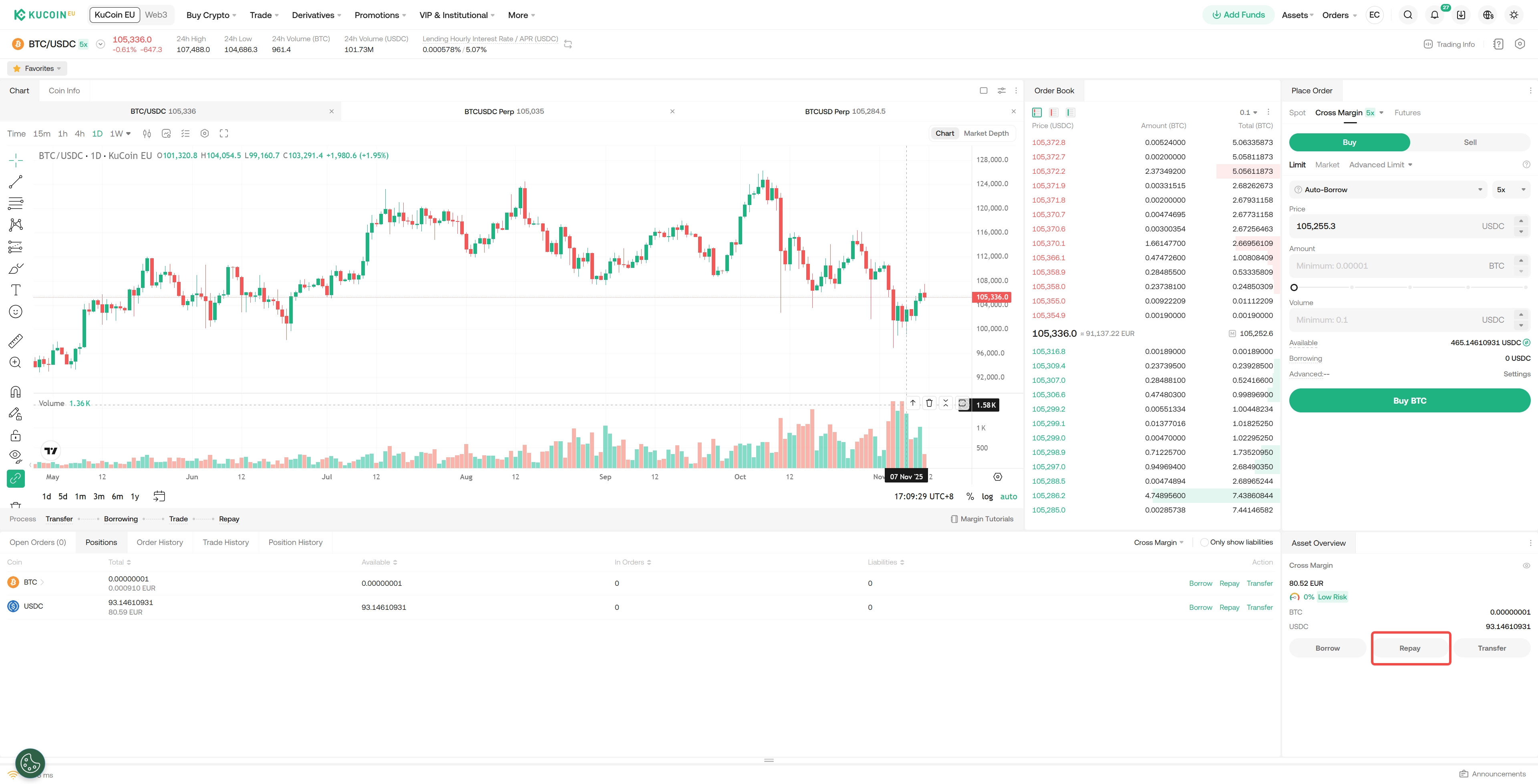
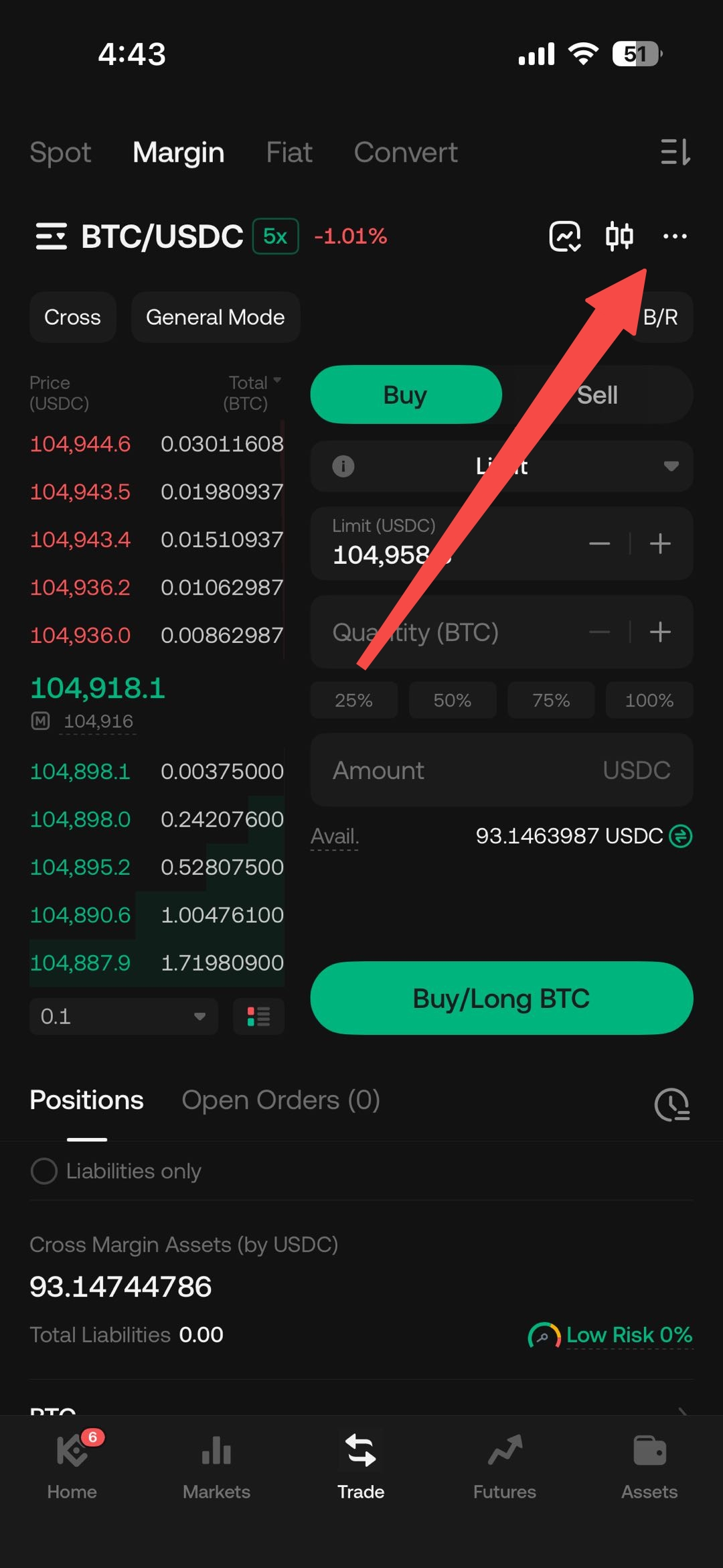
4. Repaying Borrowed Assets
At the end of the trade, you need to repay all borrowed funds plus interest. Remaining balances after repayment reflect updated account equity.
Important Notes:
- Repayment Token: You must repay the same token that you borrowed. For example, if you borrowed USDC, you cannot use other tokens to repay that loan.
- If your Margin Account lacks sufficient USDC to repay the loan, you can sell other tokens in the account for USDC and then repay the borrowed amount.
Web:
App:
Note on Short Selling
This guide focuses on buying long in margin trading. However, if you predict that a specific token's price will decrease, you can follow these alternate steps:
- Borrow the token you expect to drop in value (e.g., BTC).
- Sell it at the current market price.
- When the price falls, repurchase the token at the lower price.
- Repay the borrowed token and interest, keeping the difference as your profit.
This describes the order of operations only and does not represent a forecast or trading recommendation.
Reminder: Margin trading offers opportunities for increased profits but carries significant risks due to the leveraged nature of trading. Ensure you thoroughly understand the process of borrowing, trading, and loan repayment before engaging in margin trades. Always trade responsibly.
Important Risk Disclosure
Cross Margin Trading involves significant risks, including:
- Liquidation risk: If the debt ratio reaches system-defined thresholds, all collateral in the Cross Margin account may be liquidated.
- Leverage risk: Losses may exceed the initial collateral deposited.
- Market volatility: Rapid price movements may cause the debt ratio to rise suddenly.
- Interest accumulation: Borrowed assets accrue interest over time, increasing overall liabilities.
- Account-wide exposure: Because collateral is shared, losses in one position can affect all positions in the Cross Margin account.
Margin trading is not suitable for all users. Users should evaluate their financial situation, monitor positions regularly, and consider seeking independent financial advice.
We hope this article has been helpful. Please reach out to our 24/7 customer support via online chat or submit a ticket if you have any other questions.