

Do You Pay Tax on Crypto? What Australians Need to Know
2026/01/10 10:57:02
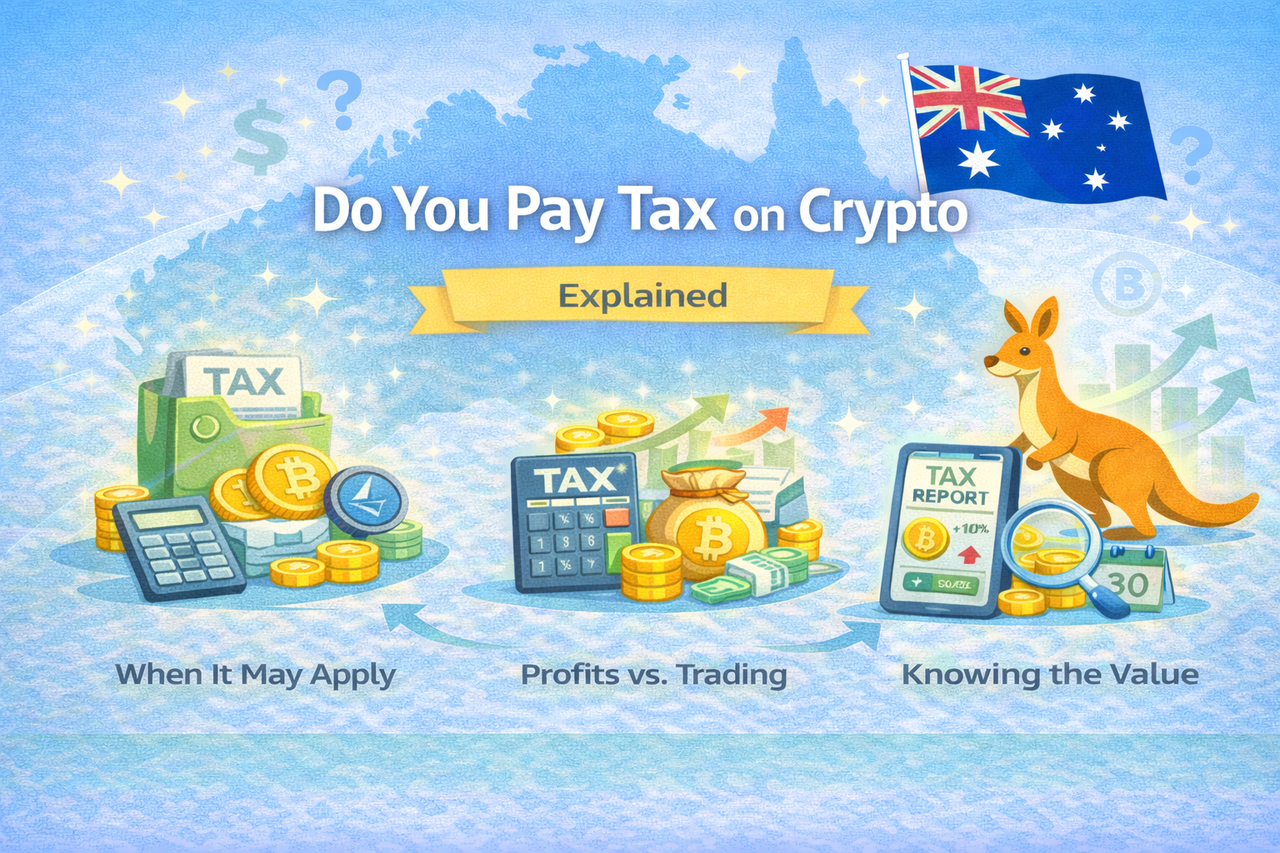
Introduction
For many Australians, cryptocurrency starts as a simple experiment, buying a small amount, making a trade, or receiving crypto through an online platform. It is only later, often closer to tax time, that a key question arises: do you pay tax on crypto?
Unlike traditional assets, crypto transactions can happen frequently and across different types of activities, which makes tax treatment less intuitive. In Australia, whether crypto is taxed depends on what you do with it, not just whether you own it. This guide explains when crypto may be taxable, how profits and trading are commonly viewed, and why timing plays an important role in understanding crypto tax in Australia.
Do You Pay Tax on Crypto in Australia?
A frequent question is do you pay tax on crypto in Australia. In general terms, crypto is not ignored by the Australian tax system. Cryptocurrency is usually treated as property rather than legal tender, which means existing tax principles apply to certain activities involving crypto.
Simply owning crypto does not automatically mean you pay tax. Tax considerations typically arise when specific events occur. Understanding this distinction helps Australians avoid unnecessary confusion and focus on the situations that actually matter.
When Do You Pay Tax on Crypto?
Another common search is when do you pay tax on crypto. In Australia, tax is generally linked to actions rather than balances. This means tax may become relevant when crypto is disposed of or used in certain ways.
For Australians, the key takeaway is that timing matters. Knowing when an event occurs is more important than focusing on how long crypto has been held without activity. This event-based approach explains why some people pay tax on crypto while others do not.
Do You Pay Tax on Crypto Profits?
Do you pay tax on crypto profits is a question often asked by people who see changes in the value of their holdings. In simple terms, unrealised price movements alone do not usually trigger tax. Tax considerations generally arise when profits are realised through certain actions.
For Australians, understanding the difference between unrealised value changes and realised outcomes is critical. This helps clarify why watching prices move up does not automatically result in a tax obligation.
Do You Pay Tax on Crypto Trading?
Another common concern is do you pay tax on crypto trading. Trading typically involves multiple transactions, which can increase the number of events that may be relevant for tax purposes. This is why traders often become more aware of crypto tax issues.
Many Australians trade crypto through platforms such as KuCoin Australia, which provide transaction histories and market access. These records help users review their activity and understand how often potential tax-relevant events occur.
Understanding Crypto Value When Tax Is Considered
Tax outcomes depend heavily on the value of crypto at specific times. This is why market pricing matters when learning about crypto tax. Australians often look back at prices to understand transaction values when events occurred.
You can observe live and historical crypto market prices through the KuCoin Crypto Prices page. This helps users understand how crypto values fluctuate and why accurate pricing is important when thinking about tax timing.
Common Misunderstandings About Paying Tax on Crypto
A common misunderstanding is believing that crypto transactions are invisible or untraceable. In reality, many transactions are recorded publicly, and exchanges maintain detailed records. Another misconception is assuming that small or infrequent transactions never matter.
For Australians, understanding that crypto tax is about how rules apply rather than whether crypto is “different” helps set realistic expectations.
Learning About Crypto Tax Before Using Tools
Some Australians look for calculators or shortcuts to answer whether they pay tax on crypto. While tools can be useful for learning, they rely on assumptions and data quality. Without understanding the basics, calculator outputs can be misleading.
Educational content helps Australians build foundational knowledge before relying on estimates. For beginner-friendly explanations on crypto fundamentals and responsible participation, the KuCoin Australia Blog offers learning-focused articles tailored to AU users.
Responsible Approach to Crypto and Tax in Australia
A responsible approach starts with understanding that crypto is part of the Australian tax system. Keeping records, understanding transaction history, and learning when tax may apply all contribute to better outcomes.
Australians who view crypto tax as an educational topic rather than something to avoid often feel more confident and less stressed as their crypto activity evolves.
Conclusion: Do You Pay Tax on Crypto in Australia?
So, do you pay tax on crypto? In Australia, the answer depends on what you do with your crypto, not simply on owning it. Understanding when tax may apply, how crypto profits are viewed, and why trading activity matters helps Australians navigate this topic with greater clarity.
Education is the most effective way to approach crypto tax questions. Australians who understand the basics are better prepared to participate responsibly in the crypto ecosystem.
If you are exploring crypto in an environment designed for Australian users and want to better understand how crypto activity works, you can start here: Get started with crypto on KuCoin Australia.
Frequently Asked Questions (FAQ)
Q: Do you pay tax on crypto in Australia? A: It depends on the activity. Owning crypto alone does not usually trigger tax, but certain actions may.
Q: Do you pay tax on crypto profits? A: Tax is generally linked to realised outcomes rather than unrealised price changes.
Q: Do you pay tax on crypto trading? A: Trading may involve multiple events that can be relevant for tax purposes, depending on circumstances.
Q: When do you pay tax on crypto? A: Tax considerations usually arise when specific crypto-related events occur, not simply over time.
Q: Is crypto tax different from other taxes in Australia? A: Crypto is treated as property, so existing tax principles apply rather than special crypto-only rules.