

Crypto Tax in Australia: A Clear Guide for Australian Users
Introduction
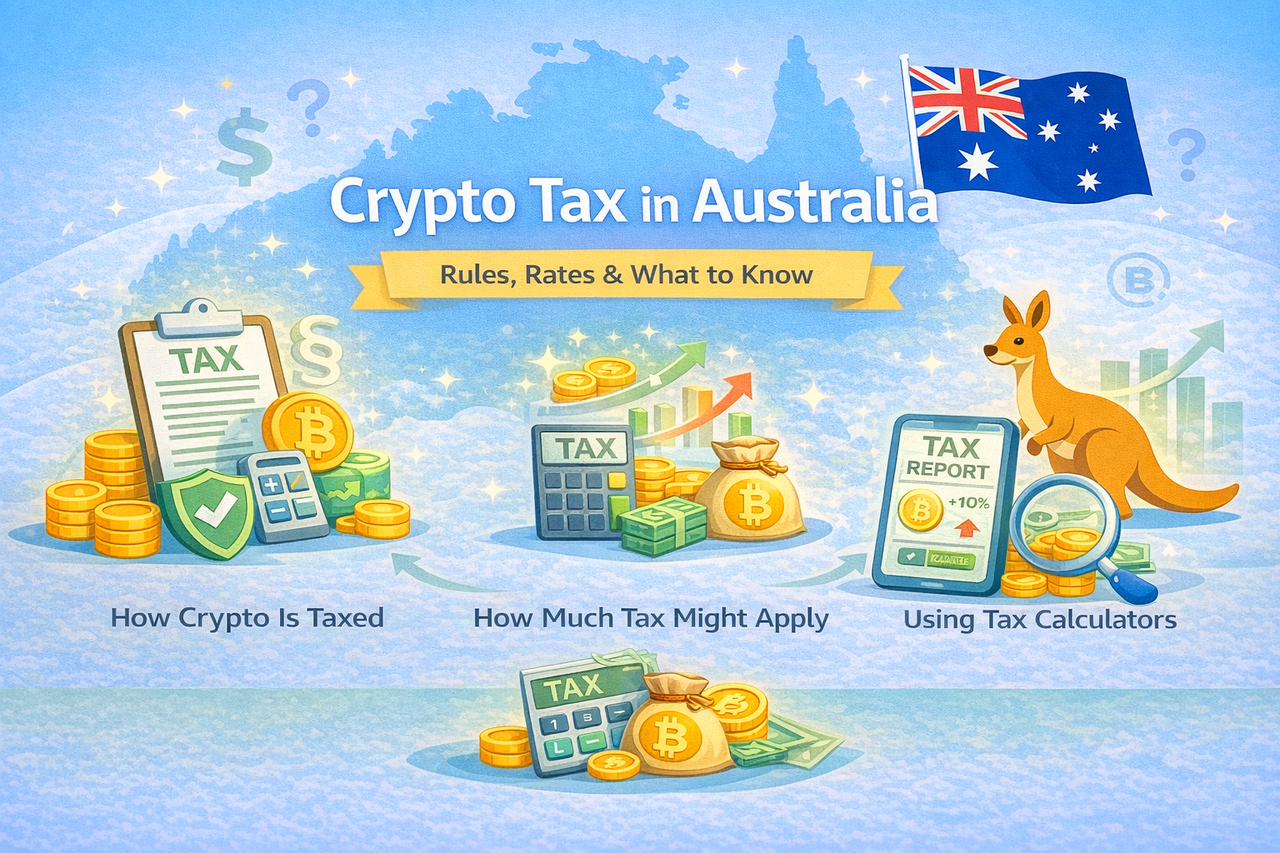
Crypto tax in Australia is a topic that many Australians only start thinking about after they buy, trade, or earn cryptocurrency. While crypto can feel very different from traditional assets, the Australian tax system applies clear principles to how digital assets are treated. Confusion often arises because crypto operates globally, trades 24/7, and involves activities that do not exist in traditional finance.
For Australian users, understanding what is crypto tax in Australia is essential for responsible participation in the crypto ecosystem. This guide is purely informational and explains how crypto tax works, how much crypto tax in Australia may apply in general terms, common misconceptions around avoiding crypto tax, and how crypto tax calculators fit into the learning process.
What Is Crypto Tax in Australia?
What is crypto tax in Australia comes down to how the Australian Taxation Office (ATO) views cryptocurrency. In Australia, crypto is generally treated as property rather than legal tender. This means that certain crypto transactions may trigger tax consequences, similar to how other assets are treated.
Crypto tax is not a separate or special tax. Instead, existing tax principles apply to crypto activities. Understanding this helps Australians realise that crypto is not outside the tax system, even though it operates on decentralised technology.
How Crypto Is Commonly Taxed in Australia
When Australians ask how much is crypto tax in Australia, the answer depends on individual circumstances rather than a fixed rate. The amount of tax potentially payable depends on factors such as the type of activity, the length of time crypto is held, and personal tax position.
Crypto transactions that involve disposing of an asset may result in a capital gain or loss. The specific outcome varies from person to person. Because of this, crypto tax in Australia is best understood as a framework rather than a single number or percentage.
How Much Crypto Tax in Australia Should You Expect?
Searches like how much crypto tax in Australia often suggest people are looking for a simple percentage. In reality, crypto tax outcomes depend on how the asset is used. Different activities can have different tax implications.
For Australians learning about crypto tax, it is more useful to understand the types of events that may be relevant rather than focusing on exact amounts. This approach helps set realistic expectations and reduces confusion caused by oversimplified answers online.
Common Misunderstandings About Crypto Tax
One major misunderstanding is the idea of how to avoid crypto tax in Australia. Crypto tax is governed by existing tax laws, and deliberately avoiding tax obligations is not the same as understanding how tax rules apply.
Another misconception is that crypto transactions are invisible or untraceable. In reality, many transactions are recorded publicly, and exchanges maintain records that may be relevant for tax purposes. Understanding these realities helps Australians approach crypto tax more responsibly.
Crypto Tax in Australia and Trading Activity
Australians who trade crypto frequently often become more aware of tax considerations. Trading involves multiple transactions, which can increase record-keeping complexity. This is one reason why learning about crypto tax early is beneficial.
Many Australians use platforms such as KuCoin Australia to access crypto markets. These platforms provide transaction histories that help users understand their activity, which is an important step in learning how crypto tax may apply.
Using a Crypto Tax in Australia Calculator
Searches for crypto tax in Australia calculator reflect a desire for clarity. A crypto tax calculator typically estimates potential outcomes using transaction data and historical prices. These tools can be useful for educational purposes, helping users see how different transactions might be treated.
However, calculators rely on assumptions and data quality. Australians should view them as learning tools rather than definitive answers. Understanding how prices are determined at different times is part of this process.
Why Market Prices Matter for Crypto Tax
Crypto tax calculations depend on the value of crypto at specific points in time. This makes historical price data important. Australians often review price data to understand transaction values when they occurred.
You can observe real-time and historical price information through the KuCoin Crypto Prices page. This helps users see how market values fluctuate and why accurate pricing matters when learning about crypto tax.
Learning Before Acting on Crypto Tax
Before worrying about exact tax outcomes, many Australians benefit from learning how crypto works and how tax principles apply in general. Education reduces anxiety and helps users ask better questions when seeking guidance.
For beginner-friendly explanations on crypto topics, market behaviour, and responsible participation, the KuCoin Australia Blog provides educational content tailored to Australian users.
Responsible Approach to Crypto Tax in Australia
A responsible approach to crypto tax in Australia involves understanding that crypto is part of the existing tax system. Keeping records, learning basic principles, and recognising the limits of calculators all contribute to better outcomes.
Crypto tax does not need to be intimidating when approached as a learning process. Australians who build understanding early are better prepared as their crypto activity evolves.
Conclusion: Understanding Crypto Tax in Australia
Crypto tax in Australia is not about a single rate or rule. It is about how existing tax principles apply to digital assets. Understanding what crypto tax is, how much crypto tax in Australia may apply in general terms, and why calculators are only estimates helps Australians navigate this area with greater confidence.
Rather than focusing on shortcuts or avoidance, education and awareness provide the strongest foundation. Australians who understand how crypto tax works are better positioned to participate responsibly in the crypto ecosystem.
If you are exploring crypto in an environment designed for Australian users and want to better understand how crypto activity is tracked, you can start here: Get started with crypto on KuCoin Australia.
Frequently Asked Questions (FAQ)
Q: What is crypto tax in Australia? A: Crypto tax refers to how existing Australian tax rules apply to cryptocurrency activities, as crypto is treated as property.
Q: How much is crypto tax in Australia? A: There is no fixed rate. The amount depends on individual circumstances and the type of crypto activity.
Q: How much crypto tax in Australia do traders pay? A: This varies based on trading activity, holding periods, and personal tax position.
Q: How to avoid crypto tax in Australia? A: Avoiding tax is not the goal. Understanding how tax rules apply and meeting obligations is the correct approach.
Q: Are crypto tax calculators accurate in Australia? A: Calculators can help with estimates, but they are not definitive and should be used for learning purposes.