

Capital Gains Tax Crypto: What Australians Need to Know
2026/01/10 10:57:02
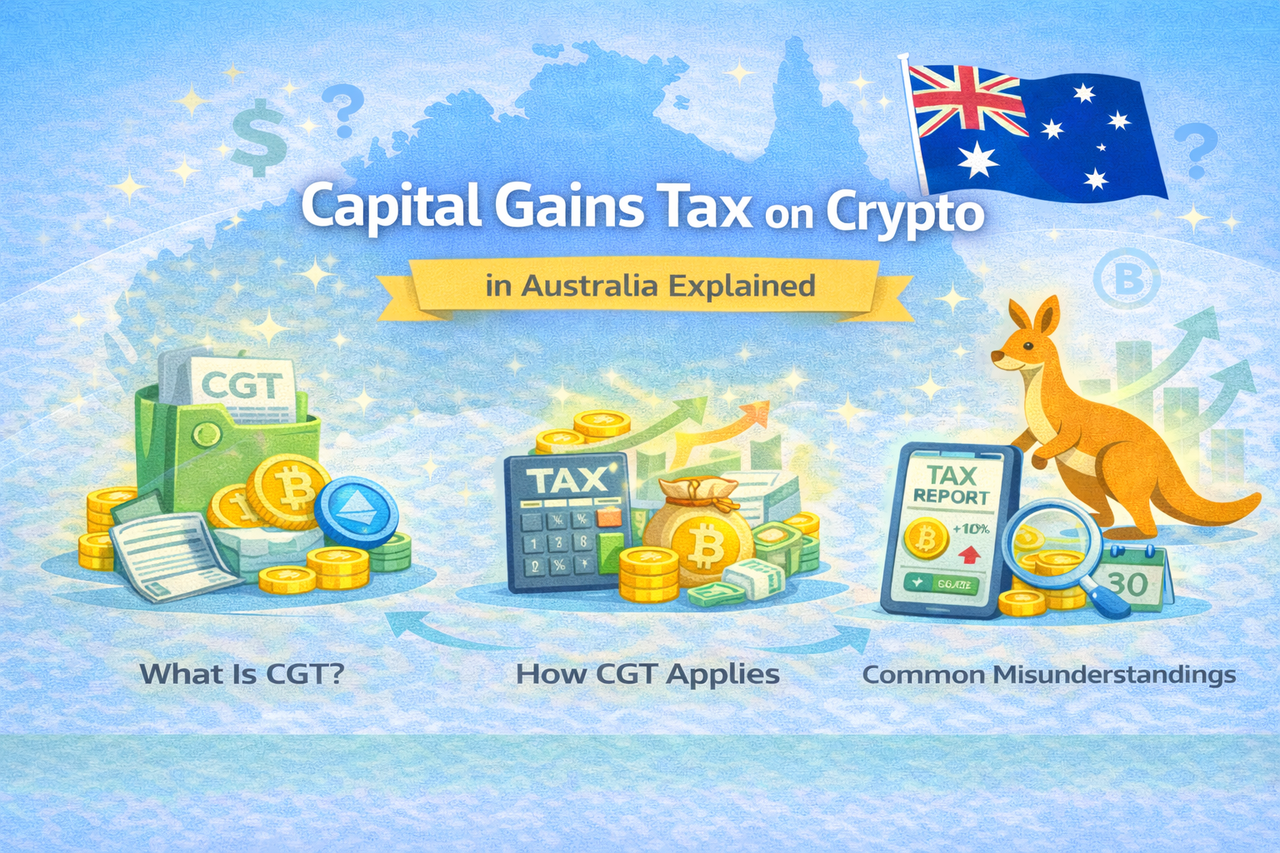
Introduction
Capital gains tax crypto is one of the most searched topics among Australians who buy, trade, or hold digital assets. While crypto often feels very different from traditional investments, Australia applies familiar tax principles to how cryptocurrency is treated. Many people only start researching crypto capital gains tax after they have already made transactions and begin preparing for tax time.
For Australian users, understanding crypto capital gains tax Australia rules is essential for responsible participation in the crypto market. This guide is purely informational and explains what capital gains tax on crypto means, how it applies in Australia, common misunderstandings around avoiding crypto CGT, and how Australians generally approach learning about this topic.
What Is Capital Gains Tax on Crypto?
Capital gains tax on crypto refers to how profits or losses from certain cryptocurrency transactions are treated under Australian tax principles. In Australia, cryptocurrency is generally treated as property rather than legal tender. This classification is the foundation of how crypto capital gains tax works.
Capital gains tax is not a separate crypto-specific tax. Instead, it is part of the existing tax system that applies to many types of assets. Understanding this helps Australians see that crypto fits into established rules rather than operating outside the system.
Crypto Capital Gains Tax Australia: The Basic Principle
When people search crypto capital gains tax Australia, they are usually trying to understand when tax may apply. In general terms, capital gains tax becomes relevant when a crypto asset is disposed of. Disposal does not only mean selling crypto for Australian dollars.
For Australians, disposal can include activities such as selling crypto, swapping one cryptocurrency for another, or using crypto in certain transactions. Understanding that capital gains tax is linked to disposal events rather than simple ownership helps clarify why CGT questions arise.
Australia Capital Gains Tax Crypto: Is There a Fixed Rate?
A common question is whether there is a specific Australia capital gains tax crypto rate. In reality, there is no single fixed CGT rate for crypto. The amount of tax that may apply depends on individual circumstances rather than the asset itself.
This is why searches for “how much capital gains tax on crypto” often lead to confusion. For Australians, it is more useful to understand how CGT principles apply rather than looking for a universal percentage that applies to everyone.
How Capital Gains Are Commonly Calculated for Crypto
Capital gains are generally calculated by comparing the value of the crypto asset at the time of disposal with its value at the time of acquisition. This means accurate price data is important.
Australians often rely on transaction histories and market prices from the platforms they use. Platforms such as KuCoin Australia provide access to crypto markets and transaction records, which help users review their activity and understand how values are reflected over time.
Using Market Prices to Understand Crypto CGT
Crypto capital gains calculations depend on the market value of crypto at specific times. This makes historical and real-time pricing important for understanding how CGT may apply.
You can observe live and historical market data across major cryptocurrencies through the KuCoin Crypto Prices page. This allows Australians to see how prices fluctuate and why timing plays a role in capital gains outcomes.
Common Misconceptions About Capital Gains Tax Crypto
One common misconception is the idea of how to get around capital gains tax crypto. Capital gains tax is part of the legal tax framework, and deliberately avoiding tax obligations is not the same as understanding how the rules apply.
Another misunderstanding is believing that small or infrequent crypto transactions are always ignored. In practice, CGT considerations depend on the nature of the transaction rather than just its size. Recognising these misconceptions helps Australians approach crypto tax more responsibly.
Capital Gains Tax and Active Crypto Trading
Australians who actively trade crypto often encounter capital gains tax questions more frequently. Trading activity can result in many disposal events, which increases the importance of understanding CGT concepts.
Access to clear transaction histories helps users review their activity. Many Australians use exchange records to better understand how often disposals occur and why capital gains tax becomes relevant.
Learning Before Using Crypto CGT Tools
Some Australians search for calculators or tools to estimate crypto capital gains tax. While tools can be helpful for learning, they rely on accurate data and assumptions.
Before relying on estimates, Australians benefit from learning how capital gains tax works conceptually. Education helps users interpret calculator outputs correctly rather than treating them as definitive answers.
For beginner-friendly explanations on crypto fundamentals, market behaviour, and responsible participation, the KuCoin Australia Blog offers educational content designed for Australian users.
Responsible Approach to Capital Gains Tax Crypto in Australia
A responsible approach to capital gains tax crypto involves understanding that crypto activity is part of the Australian tax system. Keeping records, understanding disposal events, and learning how values are determined all contribute to better outcomes.
Rather than focusing on shortcuts, Australians benefit from focusing on awareness and education. This approach reduces confusion and builds confidence over time.
Conclusion: Understanding Crypto Capital Gains Tax in Australia
Capital gains tax crypto is not a special or separate system. It reflects how Australia applies existing tax principles to cryptocurrency as an asset. Understanding what crypto capital gains tax is, when it may apply, and why there is no single rate helps Australians navigate this topic more confidently.
Education is the strongest foundation. Australians who understand capital gains tax concepts are better prepared to participate responsibly as their crypto activity evolves.
If you are exploring crypto in an environment designed for Australian users and want to better understand how crypto activity is tracked, you can start here: Get started with crypto on KuCoin Australia.
Frequently Asked Questions (FAQ)
Q: What is capital gains tax on crypto? A: It refers to how profits or losses from certain crypto disposals are treated under Australian tax rules.
Q: Is crypto capital gains tax different in Australia? A: Crypto is treated as property, so existing capital gains tax principles apply rather than special crypto-only rules.
Q: How to get around capital gains tax crypto? A: Avoiding tax is not the goal. Understanding and complying with tax rules is the correct approach.
Q: Is there a fixed capital gains tax rate for crypto in Australia? A: No. Tax outcomes depend on individual circumstances rather than a single rate.
Q: Does holding crypto trigger capital gains tax? A: Simply holding crypto does not usually trigger CGT. Disposal events are what matter.